Professional Resumes
English CV
Comprehensive curriculum vitae in English
Kiswahili CV
Wasifu kamili wa kazi kwa Kiswahili
Local Dialect CV
CV in indigenous African language
Autobiographical Essays
Journey of Innovation
20-chapter autobiography in English
Safari ya Ubunifu
Wasifu wa maisha
Innovation & Technology Presentations
Smart Attendance System
Final Year Project | PowerPoint & Video
AI-powered face recognition attendance system with multilingual documentation and video presentation.
- 20-minute video presentation
- PowerPoint slides
- Abstracts in 3 languages
- Live demonstration
Autobiographical Presentation
Life Journey | PowerPoint
Visual presentation highlighting key milestones, leadership roles, and future aspirations.
- Comprehensive life journey
- 30+ slides
- Leadership highlights
- Professional timeline
African Culture & Society
Aspect of African Culture
Cultural Analysis | PowerPoint & Video
Traditional African Music and Dance in Kenya and Its Role in Social Identity and Community Life
- 20-minute video presentation
- PowerPoint presentation
- Abstracts in 3 languages
- Real-world applications
Challenge Facing Modern Society
Social Impact | PowerPoint & Video
Analyzing Digital Unemployment Among Youth and the Skills Gap in the Modern Job Market.
- 20-minute video presentation
- Problem-solution analysis
- Abstracts in 3 languages
- Implementation roadmap
Video Presentations
Smart Attendance System
20-minute innovation presentation
Click to load video
Traditional African Music and Dance in Kenya and Its Importance in Society
20-minute cultural presentation
Click to load video
Challenge Facing Modern Society
20-minute societal challenge analysis
Click to load video
Photographic Essays
Technology Access in Schools
Documentary Photography
Visual documentation of technology infrastructure disparities across urban and rural Kenyan schools.
- 40+ photographs
- Multiple locations
- Detailed commentary
- Analysis & recommendations
Get In Touch & Online Presence
The following platforms demonstrate my professionally relevant online presence, communication, networking, and content-sharing activities.
Blog / Portfolio
iananusu.tumbozetechnologies.spaceTwitter (X)
Technology & Innovation DiscussionsCurriculum Vitae - English
CURRICULUM VITAE
PERSONAL INFORMATION
Name: ANUSU IAN
Date of Birth: 01/01/2001
ID Number: 39008836
Phone Number: +254706707144
Personal Email: [email protected]
Gender: Male
EXPERIENCE
September 2024 - December 2024
Kenya Broadcasting Corporation (Kisumu)
External Attachment
May 2022 - July 2022
Dedan Kimathi University of Technology
Internal Attachment
EDUCATION
2020 - Present
Dedan Kimathi University of Technology
Bachelor of Science in Information Technology
(Awaiting graduation)
2016 - 2019
Maranda High School
Kenya Certificate of Secondary Education
2008 - 2015
Light And Salt Academy
Kenya Certificate of Primary Education
CERTIFICATIONS
Cisco:
- ✓ Introduction to Internet of Things
- ✓ CCNA 1: Introduction to Networks
- ✓ Introduction to Cybersecurity
SKILLS
i. Programming:
I am at an intermediate level in programming languages which I have learned during my studies at Dedan Kimathi University of Technology.
ii. Computer hardware maintenance
iii. Networking
iv. Leadership:
I am a good and active leader and served as a class representative from 2020 to 2022 at Dedan Kimathi University of Technology and various positions in high school and primary school.
v. Communication and teamwork:
I am an active team member and can communicate easily with other people.
REFERENCES
Luke Owino
Head of ICT
Kenya Broadcasting Corporation (Kisumu)
+254720759468
Darius Riro
Kenya Broadcasting Corporation (Kisumu)
+254724683343
ANUSU IAN
[email protected]
+254 706 707 144
Wasifu wa Kazi - Kiswahili
WASIFU BINAFSI
TAARIFA BINAFSI
Jina: ANUSU IAN
Tarehe ya Kuzaliwa: 01/01/2001
Nambari ya Kitambulisho: 39008836
Nambari ya Simu: +254706707144
Barua pepe: [email protected]
Jinsia: Mwanaume
UZOEFU WA KAZI
Septemba 2024 – Desemba 2024
Kenya Broadcasting Corporation (Kisumu)
Mafunzo ya Nje (External Attachment)
Mei 2022 – Julai 2022
Dedan Kimathi University of Technology
Mafunzo ya Ndani (Internal Attachment)
ELIMU
2020 – Sasa
Dedan Kimathi University of Technology
Shahada ya Sayansi katika Teknolojia ya Habari
(Ninasubiri kuhitimu)
2016 – 2019
Maranda High School
Cheti cha Elimu ya Sekondari Kenya (KCSE)
2008 – 2015
Light And Salt Academy
Cheti cha Elimu ya Msingi Kenya (KCPE)
VYETI
Cisco:
- ✓ Utangulizi wa Mtandao wa Vifaa (IoT)
- ✓ CCNA 1: Utangulizi wa Mitandao
- ✓ Utangulizi wa Usalama wa Mtandao (Cybersecurity)
UJUZI
i. Programu (Programming):
Nina ujuzi wa kati katika lugha za programu nilizojifunza chuoni.
ii. Matengenezo ya vifaa vya kompyuta
iii. Mitandao (Networking)
iv. Uongozi:
Nilihudumu kama mwakilishi wa darasa kuanzia 2020 hadi 2022 katika Dedan Kimathi University of Technology na pia kushika nafasi za uongozi shule ya sekondari na msingi.
v. Mawasiliano na kazi ya timu:
Nina uwezo mzuri wa kuwasiliana na kufanya kazi kwa ushirikiano na wengine.
MAREJELEO
Luke Owino
Mkuu wa ICT
Kenya Broadcasting Corporation (Kisumu)
+254720759468
Darius Riro
Kenya Broadcasting Corporation (Kisumu)
+254724683343
ANUSU IAN
[email protected]
+254 706 707 144
Curriculum Vitae - Local DIalect
AMAKURU GA MUNDU
Lina: ANUSU IAN
Itariki ya kuvelekhwa: 01/01/2001
Nambari ya Kitambulisho: 39008836
Nambari ya Simu: +254706707144
Barua pepe: [email protected]
Ubulume: Mwana mulume
MAKHUYA (EXPERIENCE)
September 2024 – December 2024
Kenya Broadcasting Corporation (Kisumu)
External Attachment
May 2022 – July 2022
Dedan Kimathi University of Technology
Internal Attachment
AMASOMO (EDUCATION)
2020 – Present
Dedan Kimathi University of Technology
Bachelor of Science mu Information Technology
(Nindilira kuhitimu)
2016 – 2019
Maranda High School
Kenya Certificate of Secondary Education
2008 – 2015
Light And Salt Academy
Kenya Certificate of Primary Education
VYETI (CERTIFICATIONS)
Cisco:
- ✓ Introduction to Internet of Things
- ✓ CCNA 1: Introduction to Networks
- ✓ Introduction to Cybersecurity
UBWEZO (SKILLS)
i. Programming:
Ndi n'ubwezo bwa kati mu ndimi za programming nindisomire ku Dedan Kimathi University of Technology.
ii. Kulolanga n'okutereka hardware ya computer
iii. Networking
iv. Ulongoli (Leadership):
Ndi omulongeleli mulungi; nali class representative kuva 2020 hadi 2022 ku Dedan Kimathi University of Technology, ne mu masomo ga sekondari ne pulayimari.
v. Ulagananga n'okukhola mu timu (Communication and teamwork):
Ndi muno mu timu kandi ndagananga bulungi n'abantu abandi.
ABATUKHASA (REFERENCES)
Luke Owino
Head of ICT
Kenya Broadcasting Corporation (Kisumu)
+254720759468
Darius Riro
Kenya Broadcasting Corporation (Kisumu)
+254724683343
ANUSU IAN
[email protected]
+254 706 707 144
Journey of Innovation - Autobiography
THE JOURNEY OF INNOVATION
An Autobiography by Anusu Ian
PREFACE
Technology is not just about computers and code, it's about transforming lives, solving problems, and creating possibilities where none existed before. This is the story of my journey from a curious young boy in Kenya to an aspiring tech entrepreneur, driven by an unwavering passion to expand innovations in the computer world. Through these pages, I invite you to walk with me through the experiences, challenges, and triumphs that have shaped who I am today and who I aspire to become tomorrow.
CHAPTER 1: THE BEGINNING - EARLY YEARS AND FOUNDATION
I was born on the first day of the new millennium, January 1st, 2001, a date that has always felt symbolic to me. As the world was embracing a new era of technological advancement, I arrived at a time when computers were becoming household items and the internet was beginning to weave its way into the fabric of everyday life. Perhaps it was destiny that I would grow up alongside this digital revolution.
My early years were spent in Kenya, a nation that has always been at the forefront of technological innovation in Africa, from mobile money solutions to agricultural technology. Growing up in this environment, I was surrounded by examples of how technology could leapfrog traditional development barriers and create entirely new opportunities for people.
From a young age, I was fascinated by how things worked. While other children might have been content playing with toys, I was the child who wanted to take them apart to understand the mechanisms inside. My parents quickly learned that any electronic device in the house was subject to my curious investigations. This innate curiosity would become the foundation of my future career in information technology.
CHAPTER 2: LIGHT AND SALT ACADEMY - DISCOVERING LEADERSHIP
In 2008, I began my formal education at Light And Salt Academy, where I would spend the next seven years laying the groundwork for my academic and leadership journey. The name of the school Light And Salt Academy, carried profound meaning that I would only fully appreciate years later. Just as light illuminates and salt preserves and enhances, education was meant to enlighten our minds and enhance our potential.
Light And Salt Academy was more than just a place of learning; it was where I first discovered my capacity for leadership. In primary school, I was selected to serve as a class prefect, a responsibility that taught me the fundamentals of representation, mediation, and service. Being a class prefect meant being the bridge between students and teachers, ensuring that our classroom ran smoothly, and that everyone's voice was heard.
One of my most memorable roles was serving as the bell ringer. While this might seem like a simple task, it taught me about punctuality, responsibility, and how even small roles contribute to the smooth functioning of an institution. Every time I rang that bell, signaling the start or end of a lesson, I was reminded that timing and consistency matter in every aspect of life, a lesson that would prove invaluable in my later work with technology systems that demand precision and reliability. The pinnacle of my leadership journey at Light and Salt Academy came when I was selected as School Head Boy. This was both an honor and a weighty responsibility. As Head Boy, I represented the entire student body, served as a liaison between students and the school administration, and helped shape school policies and activities.
Being Head Boy taught me about stakeholder management and balancing the competing interests of students, teachers, and administrators while maintaining the school's overall vision and values. I organized school events, led student councils, gave speeches at assemblies, and served as a role model for younger students.
One initiative I'm particularly proud of from my time as Head Boy was establishing better communication channels between students and administration. I instituted regular feedback sessions where students could voice concerns and suggestions in a structured, respectful manner. This not only improved school life but also taught me valuable lessons about systematic problem-solving and institutional change, lessons that inform my approach to systems analysis and design today.
During my years at Light And Salt Academy, I developed strong foundations in mathematics and sciences, subjects that would become crucial for my future studies in information technology. My teachers recognized my aptitude for logical thinking and problem-solving, often challenging me with additional problems to solve. These early academic challenges built my confidence and reinforced my belief that with dedication and hard work, any problem could be solved.
Beyond academics, Light And Salt Academy instilled in me values of integrity, hard work, and community service. The school's emphasis on character development alongside academic excellence shaped my understanding that true success isn't just about what you know, but about who you are and how you use your knowledge to benefit others.
CHAPTER 3: THE TRANSITION - FROM PRIMARY TO SECONDARY EDUCATION
Completing my primary education in 2015 with my Kenya Certificate of Primary Education was a significant milestone. It marked the end of one chapter and the beginning of another, more challenging phase of my educational journey. The transition from primary to secondary school is a pivotal moment in any young Kenyan's life, and I approached it with a mixture of excitement and nervousness.
The process of selecting and joining a secondary school involved careful consideration. My family and I discussed various options, weighing factors like academic reputation, facilities, and opportunities for personal growth. When the opportunity to join Maranda High School presented itself, I knew I had been given a chance to attend one of Kenya's premier educational institutions.
Maranda High School had a reputation for academic excellence and strong discipline, but it was also known for its vibrant co-curricular programs. As someone interested in both academics and extracurricular activities, I felt this was the perfect environment for my growth and development during the crucial teenage years.
CHAPTER 4: MARANDA HIGH SCHOOL - BUILDING CHARACTER AND COMPETENCE
Walking through the gates of Maranda High School in 2016 for the first time, I felt a surge of pride and determination. This institution, known for producing leaders and scholars, would be my home for the next four years. I was ready to embrace every opportunity it offered.
Maranda High School's motto and traditions emphasized excellence, discipline, and service. From day one, we were encouraged to strive for the highest standards in everything we did. The school's rigorous academic program pushed me to develop better study habits, time management skills, and intellectual discipline.
Academic Pursuits and Growing Interest in Technology
During my time at Maranda, my interest in technology began to crystallize. While I excelled in various subjects, I found myself particularly drawn to mathematics, physics, and any opportunity to interact with computers. The school's computer laboratory became one of my favorite places. During computer studies lessons, I would often finish assignments quickly and then explore additional features of the software we were using or experiment with programming concepts.
I vividly remember the first time I wrote a simple program that actually worked. It was a basic calculator application, nothing sophisticated, but seeing the code I had written produce the correct output filled me with an indescribable sense of accomplishment. That moment was transformative—it was when I realized that programming was not just about memorizing syntax, but about creative problem-solving and bringing ideas to life through logical instructions.
The Band: Lessons in Harmony and Discipline
One of the most enriching experiences at Maranda High School was my participation in the school band. I learned to play various brass instruments, including the trumpet, trombone, and euphonium. Being part of the band taught me lessons that extended far beyond music.
In a band, every instrument has its role, and the beauty of the music depends on each player doing their part correctly and in harmony with others. This taught me about teamwork in a profound way. I learned that collaboration isn't just about working together—it's about understanding your role, respecting others' contributions, and trusting that when everyone does their part with excellence, the result is something beautiful and greater than the sum of its parts.
The discipline required for music practice translated directly to other areas of my life. Learning an instrument requires patience, repetition, and persistence through frustration. There were times when mastering a particular piece seemed impossible, but breaking it down into smaller sections, practicing consistently, and gradually putting it all together taught me a methodology for approaching complex challenges that I still use today in programming and system development.
The band also taught me about timing and synchronization—concepts that would prove directly applicable to my later work in information technology, particularly in areas like real-time systems, database synchronization, and network coordination.
Leadership Journey: From Class Secretary to Dorm Captain
My leadership journey at Maranda High School began modestly but progressed steadily. I started as a class secretary, representing my classmates and helping maintain order and communication within our class. This role taught me to balance authority with approachability, to enforce rules while understanding individual circumstances, and to represent my peers' interests to the school administration.
As I demonstrated reliability and leadership capability, I was appointed as a dorm prefect. This role came with additional responsibilities—ensuring that dormitory rules were followed, mediating conflicts among students, and creating an environment conducive to both rest and study. Living together in a boarding school environment creates unique challenges, and as a dorm prefect, I learned to navigate different personalities, manage limited resources fairly, and create a sense of community among diverse individuals.
My responsibilities grew when I was promoted to dorm captain. As captain, I wasn't just enforcing rules; I was setting the tone for our entire dormitory. I learned that leadership is as much about example as it is about authority. If I expected punctuality, I had to be punctual. If I expected cleanliness and order, I had to maintain my own space impeccably. This principle of leading by example has remained a cornerstone of my leadership philosophy.
Preparing for the Future
As my time at Maranda High School drew to a close in 2019, I had to make crucial decisions about my future. The Kenya Certificate of Secondary Education (KCSE) examinations loomed, and my performance would significantly impact my university options and career trajectory.
I had already decided that I wanted to pursue information technology at the university level. The question was which institution would provide the best education and opportunities. I researched various universities, considering factors like program curriculum, faculty expertise, industry connections, and alumni success stories.
Dedan Kimathi University of Technology emerged as a compelling option. Known for its strong engineering and technology programs, hands-on approach to learning, and emphasis on innovation, it seemed like the ideal place to transform my interest in technology into professional expertise.
CHAPTER 5: DEDAN KIMATHI UNIVERSITY - THE PROFESSIONAL FOUNDATION
In 2020, I enrolled at Dedan Kimathi University of Technology to pursue a Bachelor of Science in Information Technology. This marked a new chapter in my life, not just academically, but personally. University represented independence, deeper specialization, and the beginning of my journey toward professional competence.
First Year: Foundations and Adjustments
The first year of university was a period of adjustment and foundation-building. The academic environment was markedly different from high school. Professors expected greater independence, critical thinking, and self-directed learning. The curriculum introduced me to the fundamental concepts of computer science and information technology—data structures, algorithms, programming paradigms, database management, and computer architecture.
I was introduced to programming languages beyond the basics I had encountered in high school. Learning C and C++ taught me about low-level programming, memory management, and the foundations of how computers actually process instructions. These languages, while challenging, provided insights into computer operations that high-level languages often abstract away.
One of the most valuable aspects of first year was learning to learn. University education isn't about memorizing facts; it's about developing the ability to acquire, evaluate, and apply knowledge independently. Professors would introduce concepts in lectures, but truly understanding and mastering them required extensive self-study, experimentation, and practice.
Leadership Continues: Class Representative
My leadership journey didn't end with high school. In my first year at Dedan Kimathi University, my classmates elected me as class representative, a position I would hold for two years (2020-2022). This role was different from my high school leadership positions but equally valuable.
As class representative, I served as the primary liaison between students and faculty. I coordinated with lecturers about schedule changes, communicated student concerns and feedback, organized study groups, and facilitated class meetings to discuss academic and social issues.
One of the most important skills I developed was negotiation. When there were conflicts about deadlines, examination schedules, or course requirements, I had to represent student interests while understanding the constraints and perspectives of faculty members. This required diplomacy, clear communication, and the ability to find mutually acceptable solutions.
Managing schedules was another critical responsibility. Coordinating with multiple lecturers, ensuring classrooms were available, communicating schedule changes to classmates, and organizing makeup sessions when classes were missed required meticulous attention to detail and organizational skills. These experiences directly parallel project management in IT—coordinating multiple stakeholders, managing resources, and ensuring timely delivery of outcomes.
Second Year: Deepening Technical Knowledge
My second year brought more specialized and challenging courses. I delved deeper into programming with languages like Java and began learning web technologies—HTML, CSS, and JavaScript. Web development fascinated me because it combined technical skills with creativity and offered immediate, visual feedback on your work.
I also began learning PHP, which opened up the world of server-side programming and dynamic web applications. Understanding how to connect front-end interfaces with back-end databases and business logic was transformative. Suddenly, I could conceptualize and build complete applications that could actually solve real-world problems.
Database management became another area of focus. Learning MySQL and understanding database design, normalization, queries, and optimization taught me about data—the lifeblood of modern applications. I realized that good software isn't just about clever code; it's about properly structured, efficiently stored, and securely managed data.
Networking courses introduced me to how computers communicate with each other, the protocols that govern internet communication, and the architecture of modern networks. This knowledge would prove directly applicable during my later attachment at Kenya Broadcasting Corporation.
Internal Attachment: First Professional Experience
In May 2022, I undertook my internal attachment at Dedan Kimathi University of Technology. This was my first extended experience working in a professional IT environment rather than just completing academic assignments.
During this attachment, I worked closely with the university's IT department, gaining exposure to real-world IT operations. I observed and participated in system maintenance, user support, network troubleshooting, and various IT projects. This experience was invaluable in bridging the gap between theoretical knowledge and practical application. I also did a group project to create a visual basic hospital management system.
One significant lesson from this attachment was understanding the importance of user-centric IT. Academic assignments focus on whether code works correctly, but professional IT work must consider user experience, documentation, maintainability, and how solutions fit into existing systems and workflows. I learned that elegant code that users find confusing or difficult to use is ultimately unsuccessful.
I also gained appreciation for the unglamorous but essential aspects of IT work—documentation, testing, backup procedures, security protocols, and routine maintenance. These aren't as exciting as developing new features, but they're what keeps systems running reliably day after day.
CHAPTER 6: EXPANDING HORIZONS - CERTIFICATIONS AND CONTINUOUS LEARNING
While progressing through my degree program, I recognized that formal education, while essential, isn't sufficient in the rapidly evolving field of information technology. The technologies, tools, and best practices that are cutting-edge today may be obsolete in a few years. This realization drove me to pursue additional certifications and continuous self-directed learning.
Cisco Certifications: Building Networking Expertise
I enrolled in several Cisco certification courses, recognizing that networking expertise would be valuable regardless of which specific IT career path I ultimately pursued. Everything in modern IT—from web applications to cloud computing to IoT devices—depends on robust, well-designed networks.
Introduction to Internet of Things (IoT): This course opened my eyes to the emerging world of connected devices. IoT represents the convergence of physical devices, sensors, network connectivity, and data analytics. Learning about IoT gave me insights into how technology is expanding beyond traditional computers and smartphones to encompass virtually every aspect of our physical environment.
The course covered IoT architectures, communication protocols, data management, and security considerations. I was particularly fascinated by IoT applications in agriculture, healthcare, and smart cities—all areas with tremendous potential for positive impact in Kenya and across Africa.
CCNA 1: Introduction to Networks: This foundational networking course provided comprehensive knowledge of network fundamentals. I learned about the OSI model, TCP/IP protocols, IP addressing, subnetting, routing, and switching. The course combined theoretical knowledge with practical exercises using Cisco Packet Tracer simulation software.
Understanding networking at this level demystified how the internet actually works. When you visit a website or send an email, there's an incredibly complex but elegant system of routers, switches, protocols, and addressing schemes making it all possible. This knowledge has proven invaluable in troubleshooting connectivity issues, designing network architectures, and understanding the infrastructure requirements of applications I develop.
Introduction to Cybersecurity: In an increasingly connected world, cybersecurity isn't optional—it's essential. This course introduced me to the fundamental concepts of information security, including confidentiality, integrity, and availability (the CIA triad).
I learned about common threats and vulnerabilities, attack vectors, defensive measures, and security best practices. The course covered topics like malware, social engineering, encryption, authentication, network security, and incident response.
What struck me most was realizing that security isn't just a technical issue—it's a human issue. The most sophisticated security systems can be undermined by a single user clicking on a phishing link or using a weak password. This understanding has influenced how I approach system design, always considering security from both technical and human factors perspectives.
Self-Directed Learning: Staying Current
Beyond formal certifications, I've maintained a practice of continuous self-directed learning. I regularly follow technology blogs, watch tutorial videos, participate in online coding challenges, and experiment with new technologies.
Learning Visual Basic gave me insights into rapid application development and desktop applications. Although not as trendy as web technologies, Visual Basic taught me valuable concepts about event-driven programming and user interface design.
Currently, I'm learning React, one of the most popular frameworks for building modern web applications. React's component-based architecture and virtual DOM represent a different paradigm from traditional web development, and mastering it is opening new possibilities for the kinds of applications I can build.
I've also been exploring Python more deeply, particularly its applications in data science, machine learning, and automation. Python's extensive library ecosystem and readable syntax make it an incredibly versatile tool for diverse applications.
CHAPTER 7: KENYA BROADCASTING CORPORATION - PROFESSIONAL BREAKTHROUGH
In September 2024, I began my external attachment at Kenya Broadcasting Corporation (KBC) in Kisumu. This experience would prove to be one of the most formative periods of my professional development, providing real-world challenges, professional networking opportunities, and valuable lessons about working in a large, established organization.
Arrival at KBC: First Impressions
Walking into KBC for the first time, I was both excited and nervous. This was Kenya's national broadcaster, an institution with decades of history and a vital role in the nation's media landscape. I would be working in the actual studios where news programs, entertainment shows, and other content that reached millions of Kenyans were produced.
My supervisors, Luke Owino (Head of ICT) and Darius Riro, welcomed me warmly and provided a comprehensive orientation. They explained KBC's operations, the role of the ICT department, ongoing projects, and what would be expected of me during my attachment.
From the beginning, I appreciated their approach. Rather than assigning me peripheral or make-work tasks, they involved me in substantial projects where I could make real contributions. This demonstrated their commitment to making my attachment a genuine learning experience, and it motivated me to prove myself worthy of their investment.
Studio Mashinani Upgrade Project
One of my primary responsibilities was playing an integral role in upgrading the Studio Mashinani system. Studio Mashinani was a key production facility, and the upgrade project aimed to modernize its capabilities, improve workflow efficiency, and enhance the quality of content produced there.
This project was complex, involving multiple components: hardware upgrades, software installations and configurations, system integration, testing, and staff training. My role spanned several areas of this multifaceted project.
Hardware Setup and Integration: Part of the upgrade involved installing and configuring new audio production equipment. I worked on setting up professional audio systems, including mixers, interfaces, and monitoring equipment. This required understanding audio signal flow, impedance matching, and proper grounding to avoid noise and interference.
The physical setup was just the beginning. The real challenge was integration—ensuring that all these components worked together seamlessly, that signal routing was logical and efficient, and that the system was both powerful and intuitive for operators to use.
Software Installation: Cubase and FL Studio: A significant portion of my work involved installing and configuring Cubase and FL Studio—professional digital audio workstation (DAW) software used for recording, editing, and producing audio content.
Installing this software wasn't just about running setup files. It involved understanding system requirements, optimizing computer settings for audio production (like adjusting buffer sizes and latency settings), installing and configuring audio drivers, setting up VST plugins, creating templates for common workflows, and establishing proper file management structures.
I created detailed documentation for both software packages, including tutorials for common tasks, troubleshooting guides, and best practices for maintaining optimal performance. This documentation would serve as an ongoing resource for KBC staff, ensuring that the knowledge transfer from this project extended beyond my attachment period.
Steinberg Audio System Configuration: The Steinberg audio system required particular attention to proper configuration. This professional-grade equipment offers extensive capabilities but requires expertise to leverage fully. I worked on configuring input and output routing, setting up monitoring chains, optimizing latency for real-time recording, and creating preset configurations for different types of productions.
One challenge was balancing audio quality with system performance. Higher audio resolution and lower latency require more system resources, so finding the optimal balance required testing, measurement, and sometimes creative problem-solving.
IT Support: The Human Side of Technology
Beyond the Studio Mashinani project, I provided general IT support to KBC workers. This aspect of my attachment taught me that technical knowledge alone isn't sufficient—communication skills, patience, and empathy are equally important when helping people with technology.
IT support requests varied widely: helping someone who couldn't access their email, troubleshooting a computer that was running slowly, explaining how to use new software, recovering lost files, resolving printer issues, and countless other challenges. Each request was an opportunity to help someone and to learn something new.
I learned to ask good diagnostic questions, to explain technical concepts in accessible language, and to remain patient when people were frustrated or stressed. I also learned to prioritize issues based on their impact on operations—a problem affecting a live broadcast needed immediate attention, while a minor inconvenience could be addressed during quieter periods.
One insight from this work was recognizing that many "technical" problems are actually training or process issues. If multiple people make the same mistake or struggle with the same task, the solution isn't just fixing each instance—it's improving documentation, providing training, or redesigning the process to be more intuitive.
Professional Growth and Lessons Learned
My time at KBC provided lessons that extended beyond technical skills:
Working in an Established Organization: KBC has established procedures, hierarchies, and cultures developed over decades. Learning to work effectively within this structure—understanding who to consult for what decisions, how to propose changes, how to navigate bureaucracy—provided valuable lessons about organizational dynamics.
Time Management and Prioritization: With multiple responsibilities and frequent unexpected issues, I had to develop better time management strategies. I learned to estimate how long tasks would realistically take, to communicate clearly about timelines, and to re-prioritize when urgent issues emerged.
Documentation and Knowledge Transfer: Creating good documentation became a priority. I learned to write clearly and comprehensively, to include screenshots and examples, and to anticipate what questions users might have. Good documentation multiplies your impact—one well-written guide can help countless people.
Professional Communication: I developed skills in professional written and verbal communication—writing clear emails, giving status updates in meetings, explaining technical issues to non-technical stakeholders, and maintaining professional relationships with colleagues at all levels of the organization.
Problem-Solving Methodology: I refined my approach to troubleshooting: gather information systematically, form hypotheses about likely causes, test those hypotheses methodically, document findings, and apply solutions carefully. This structured approach consistently led to faster, more reliable problem resolution.
CHAPTER 8: MAJOR PROJECTS - BRINGING IDEAS TO LIFE
Throughout my university education, I've worked on several substantial projects that represent the practical application of my learning and my vision for using technology to solve real problems. Three projects in particular—the Smart Attendance System, Cascade of Hope, and AI Livestock Management—showcase different aspects of my capabilities and interests.
Smart Attendance System: My Final Year Project
The Smart Attendance System represents my current final year project and embodies my approach to solving real problems with innovative technology. The inspiration for this project came from observing inefficiencies and challenges in traditional attendance systems.
The Problem: Traditional attendance systems—whether paper-based roll calls or manual sign-in sheets—are time-consuming, prone to errors, vulnerable to fraud (like proxy attendance), and difficult to aggregate for analysis. These problems became even more acute during the COVID-19 pandemic when institutions needed to track attendance in both physical and online learning environments.
The Solution: I envisioned a system using advanced facial recognition technology to automatically and accurately track attendance. The system would work seamlessly in both physical classrooms (using cameras) and online learning environments (using students' webcams), providing a unified solution for modern educational institutions.
Technical Implementation: The Smart Attendance System represents the integration of several sophisticated technologies:
Face-API.js: This JavaScript library provides facial recognition capabilities directly in the browser. I chose it because it offers a good balance of accuracy, performance, and privacy (processing happens locally rather than sending images to external servers).
WebRTC: Web Real-Time Communication enables capturing video from cameras without requiring additional plugins or installations. This makes the system accessible and easy to use across different devices and platforms.
Socket.IO: This library enables real-time, bidirectional communication between the web clients and server. It's essential for instantly updating attendance records, sending notifications, and providing real-time feedback to users.
PHP and MySQL Backend: The server-side logic, built with PHP, handles user authentication, data validation, attendance record storage, report generation, and system administration. MySQL provides robust, scalable data storage.
Key Features:
- Facial Recognition: The system captures and analyzes facial features to identify students accurately. I implemented enrollment processes where students register their faces, training the system to recognize them reliably.
- Anti-Spoofing Detection: A critical security feature is preventing spoofing attempts—people trying to fool the system with photographs or videos. I implemented liveness detection that requires real-time interaction to confirm an actual person is present.
- Dual Environment Support: The system works identically whether students are in a physical classroom or joining remotely via video conference. This flexibility makes it valuable beyond pandemic circumstances—supporting hybrid learning models, makeup sessions, and distributed education.
- Real-Time Tracking: As students are recognized, attendance records update instantly. Teachers can view who's present at any moment, and the system can alert about absences or late arrivals.
- Automated Reports: The system generates comprehensive reports on attendance patterns, identifying students with poor attendance, analyzing trends over time, and providing data for academic interventions.
- Notifications: Parents and administrators can receive automatic notifications about attendance, keeping them informed and enabling prompt responses to issues.
Challenges and Solutions: Developing this system presented several challenges:
Accuracy Across Diverse Conditions: Facial recognition must work reliably regardless of lighting conditions, camera quality, angles, or appearance changes (glasses, hairstyles, etc.). I addressed this through extensive testing under various conditions and fine-tuning recognition thresholds.
Privacy Concerns: Facial recognition technology raises legitimate privacy concerns. I implemented strict data protection measures, transparent policies about how facial data is used and stored, and options for students who have privacy objections.
Performance at Scale: The system needs to process multiple video streams simultaneously without lag. Optimization of code, efficient database queries, and smart caching strategies were essential for maintaining performance.
User Experience: For a system to be adopted, it must be intuitive. I invested significant effort in designing clear interfaces, providing helpful feedback, and making the enrollment and daily use processes as simple as possible.
Impact and Vision: The Smart Attendance System demonstrates how technology can eliminate tedious administrative tasks, reduce opportunities for dishonesty, provide valuable data for educational improvement, and adapt to changing learning environments. Beyond my university project, I envision this system being deployed in schools and universities across Kenya and beyond, contributing to more efficient, data-driven educational administration.
Cascade of Hope: Transforming Healthcare Management
Cascade of Hope is a comprehensive hospital management system that addresses the complex operational needs of healthcare facilities. The name reflects the cascading positive effects that efficient healthcare management can have—from improved patient care to better staff coordination to optimized resource utilization.
The Healthcare Challenge: Healthcare facilities, particularly in resource-constrained environments, often struggle with fragmented systems. Patient records might be paper-based or stored in incompatible systems, appointment scheduling might be manual and prone to conflicts, billing might be disconnected from service delivery, and inventory management might be reactive rather than proactive. These inefficiencies waste resources and can compromise patient care.
System Architecture: Cascade of Hope provides an integrated platform addressing multiple aspects of healthcare operations:
Patient Records Management: Digital storage of comprehensive patient information—medical history, diagnoses, treatments, medications, allergies, lab results, and imaging. The system ensures this information is secure, easily retrievable, and can be accessed by authorized healthcare providers when needed.
Appointment Scheduling: Automated scheduling that considers provider availability, room availability, appointment types, and patient preferences. The system prevents double-booking, sends automated reminders to reduce no-shows, and optimizes scheduling for efficiency.
Billing and Insurance Processing: Integration of service delivery with billing, automatic generation of invoices, tracking of payments, and handling of insurance claims. This reduces billing errors, accelerates payment processing, and provides financial transparency.
Inventory and Pharmacy Management: Real-time tracking of medical supplies and medications, automated reorder alerts when stocks run low, expiration date tracking, and integration with prescribing systems to ensure medications are available when needed.
Staff and Department Coordination: Management of staff schedules, shift planning, communication tools, and coordination between departments to ensure smooth operations.
Analytics and Reporting: Comprehensive dashboards and reports providing insights into operations—patient volumes, common diagnoses, treatment outcomes, resource utilization, financial performance, and more. These analytics support evidence-based decision-making and continuous improvement.
Technical Implementation: Built with PHP, JavaScript, HTML/CSS, and MySQL, Cascade of Hope demonstrates my ability to develop complex, multi-faceted applications. The system architecture prioritizes data integrity, security, and scalability. Role-based access control ensures that users only access information appropriate to their role, while audit logs track all system actions for accountability.
Real-World Impact: Healthcare management systems like Cascade of Hope can literally save lives by ensuring critical information is available when needed, preventing medication errors, optimizing resource allocation, and enabling healthcare facilities to serve more patients effectively. In the Kenyan context, where many healthcare facilities operate with limited resources, such systems can multiply the impact of available resources.
AI Livestock Management (Farm Track): Agriculture Meets Artificial Intelligence
The AI Livestock Management system represents the intersection of agriculture, computer vision, and artificial intelligence—applying cutting-edge technology to one of humanity's oldest endeavors: raising livestock.
The Agricultural Context: Livestock farming is crucial for food security and livelihoods across Kenya and Africa. However, many farmers lack tools to optimize their operations. Weighing animals typically requires physical scales and manual handling (stressful for animals and time-consuming for farmers). Health issues might not be detected until they're severe. Feed efficiency and breeding decisions are often based on intuition rather than data.
Technology Solution: The AI Livestock Management system uses computer vision and machine learning to analyze livestock automatically:
AI-Powered Weight Detection: Using cameras and computer vision algorithms, the system can estimate animal weight accurately without physical scales or handling. This is achieved by analyzing body measurements from images—length, girth, height—and applying machine learning models trained on thousands of images of animals with known weights.
Computer Vision Analysis: Beyond weight, the system analyzes visual indicators of health—body condition scores, movement patterns, coat condition, and behavioral indicators. It can flag animals that appear unwell for closer examination by farmers.
Health Monitoring and Alerts: Continuous monitoring enables early detection of health issues. If an animal shows concerning signs—reduced activity, changes in feeding patterns, abnormal behavior—the system alerts the farmer, enabling prompt intervention before issues become severe.
Breeding and Genetics Tracking: The system maintains detailed records of each animal's lineage, genetic traits, and performance. This data supports informed breeding decisions to improve herd quality over generations.
Feed Optimization Recommendations: By analyzing animal growth rates, conditions, and feed intake, the system provides recommendations for optimizing nutrition—ensuring animals receive appropriate nutrition for their age, condition, and production status.
Production Analytics Dashboard: Comprehensive visualizations and reports help farmers understand their operations—growth rates, reproduction rates, health trends, and financial performance. This data-driven approach enables continuous improvement.
Technical Challenges: This project pushed my technical capabilities:
Machine Learning Model Development: Training accurate models required collecting and labeling extensive datasets, experimenting with different algorithms, and validating accuracy across diverse conditions and animal breeds.
Computer Vision Algorithms: Extracting accurate measurements from images requires sophisticated image processing—handling varying lighting, angles, backgrounds, and ensuring consistency across different cameras and conditions.
Field Deployment Considerations: Unlike controlled laboratory conditions, real farms present challenges—inconsistent internet connectivity, varying power availability, harsh environmental conditions for equipment. The system needed to be robust and adaptable to these realities.
Broader Vision: The AI Livestock Management system represents a model for applying advanced technology to agricultural challenges. Similar approaches could address crop monitoring, pest detection, soil analysis, and numerous other agricultural applications. By making advanced technology accessible and affordable, we can help farmers increase productivity, improve sustainability, and enhance their livelihoods.
CHAPTER 9: TECHNICAL SKILLS AND CONTINUOUS LEARNING
My technical capabilities have developed through a combination of formal education, certifications, self-directed learning, and practical project work. Understanding my current skill set and my approach to continuous learning provides insight into how I've developed professionally and how I plan to continue growing.
Programming Languages: Building Blocks of Solutions
Python: I've developed considerable proficiency in Python, particularly for backend development, data processing, and AI/machine learning applications. Python's extensive library ecosystem makes it incredibly versatile—from web development with Django or Flask, to data science with pandas and NumPy, to machine learning with TensorFlow and scikit-learn.
I appreciate Python's philosophy of code readability and its emphasis on writing clear, understandable code. The Python community's commitment to excellent documentation and educational resources has also been invaluable for my learning.
PHP: As a server-side scripting language, PHP has been central to many of my web application projects. I've used PHP for building dynamic websites, RESTful APIs, and backend systems for applications like Cascade of Hope. Understanding PHP's integration with MySQL databases and its role in the LAMP (Linux, Apache, MySQL, PHP) stack has been fundamental to my web development capabilities.
JavaScript: Modern web development demands JavaScript expertise, and I've invested considerable effort in mastering both vanilla JavaScript and modern frameworks. JavaScript enables interactivity, dynamic content, and sophisticated client-side functionality. My experience ranges from basic DOM manipulation to complex applications using modern ES6+ features.
C and C++: These foundational languages taught me about low-level programming, memory management, pointers, and how computers actually execute instructions. While I don't use them daily, the understanding they provided about computer architecture and efficient programming informs all my other coding work.
Visual Basic: Learning Visual Basic gave me experience with rapid application development and event-driven programming for desktop applications. While not currently trendy, the concepts learned remain relevant across different development paradigms.
React (Currently Learning): I'm actively expanding my skills with React, recognizing its dominance in modern web development. React's component-based architecture, virtual DOM, and ecosystem of tools represent the current best practices for building scalable, maintainable web applications. This learning process reminds me that in technology, education never really ends—there's always something new to learn.
Databases and Data Management
MySQL: Relational database design and management is foundational to most applications I build. I'm comfortable with database design principles, normalization, writing complex queries, optimizing performance through indexing and query optimization, and ensuring data integrity through proper constraints and transactions.
Web Technologies and Frameworks
HTML/CSS: Strong fundamentals in HTML and CSS enable me to create well-structured, semantically correct, accessible, and responsive web interfaces. I understand modern CSS techniques including Flexbox, Grid, animations, and responsive design principles.
Socket.IO: Real-time, bidirectional communication between clients and servers is increasingly important for modern web applications. Socket.IO enables features like live updates, chat functionality, and real-time collaboration.
WebRTC: Enabling real-time video and audio communication directly in browsers without plugins opens numerous possibilities for educational platforms, telemedicine, remote collaboration, and more.
AI and Machine Learning
My work on the AI Livestock Management project introduced me to practical machine learning applications. I've gained experience with:
- Training and deploying computer vision models
- Image processing and analysis
- Data collection and preprocessing for machine learning
- Model evaluation and optimization
- Practical considerations in deploying AI systems
Networking and Infrastructure
CCNA Knowledge: My Cisco certifications provided comprehensive understanding of networking fundamentals—how data flows across networks, routing and switching, network security, and troubleshooting. This knowledge is invaluable whenever working with distributed systems, cloud services, or debugging connectivity issues.
Computer Hardware Maintenance: Understanding computer hardware—how components work, how to diagnose problems, how to upgrade systems—has been valuable both for personal projects and in support roles. This knowledge bridges the gap between software and the physical systems it runs on.
Audio Systems: My experience setting up professional audio systems at KBC represents specialized knowledge at the intersection of technology and media production. This expertise would be valuable for broadcasting, content creation, or multimedia applications.
Soft Skills: The Human Side of Technology
Technical skills are essential, but soft skills often determine real-world success:
Communication: The ability to explain technical concepts to non-technical people, to write clear documentation, to present ideas persuasively, and to listen actively to understand problems.
Leadership and Teamwork: Years of leadership roles taught me to motivate teams, delegate effectively, resolve conflicts, and create environments where people can do their best work. Simultaneously, I learned to be a good team member—supporting others, accepting feedback, and putting team success above individual recognition.
Problem-Solving: Technology work is fundamentally about solving problems. My approach combines analytical thinking (breaking down complex problems into manageable components), creativity (finding novel solutions when standard approaches don't work), and persistence (continuing through frustration when solutions aren't immediately obvious).
Time Management: Balancing coursework, projects, leadership responsibilities, and personal growth requires effective time management—prioritizing tasks, estimating effort realistically, and using time efficiently.
Adaptability: Technology changes rapidly. The ability to learn new technologies, adapt to new methodologies, and remain productive amid change is perhaps the most valuable skill in our field.
CHAPTER 10: PHILOSOPHY AND APPROACH TO TECHNOLOGY
Beyond specific technical skills, I've developed a philosophy about technology and its role in society that guides my work and aspirations.
Technology as a Tool for Human Flourishing
I believe technology should serve humanity, not the reverse. Every system I design starts with understanding the people who will use it and the problems they face. The most sophisticated technical solution is worthless if it doesn't improve lives, solve real problems, or create genuine value.
This human-centered approach means:
- Designing for actual users, not idealized ones
- Prioritizing usability alongside functionality
- Considering accessibility so technology serves everyone
- Thinking about unintended consequences and ethical implications
- Remembering that behind every data point is a real person
The African Context: Solving Local Problems
While technology is global, problems are often local. I'm particularly interested in developing solutions appropriate for the African context—understanding local infrastructure constraints, affordability considerations, cultural factors, and specific challenges faced by communities here.
This doesn't mean settling for less sophisticated solutions; rather, it means being creative about how to deliver maximum value within real-world constraints. Mobile-first design, offline functionality, efficient bandwidth usage, and interfaces that work across literacy levels are all examples of contextually appropriate design.
Innovation Through Integration
Many of my projects demonstrate a principle I call "innovation through integration"—combining existing technologies in novel ways to create new capabilities. The Smart Attendance System integrates facial recognition, web technologies, and real-time communication. The AI Livestock Management system combines computer vision, machine learning, and agricultural domain knowledge.
This approach recognizes that you don't always need to invent entirely new technologies; sometimes, the innovation lies in creatively combining available tools to address problems in new ways.
Commitment to Quality and Excellence
Whether writing code, designing systems, or supporting users, I believe in doing work that I can be proud of. This means:
- Writing clean, well-documented, maintainable code
- Testing thoroughly before deployment
- Considering security from the beginning, not as an afterthought
- Planning for scalability and future growth
- Taking responsibility for the entire lifecycle of systems I build
Quality takes more time initially but pays dividends in reliability, maintainability, and user satisfaction.
Continuous Learning and Intellectual Humility
In a field that evolves as rapidly as information technology, intellectual humility is essential. I maintain a learning mindset—acknowledging what I don't know, actively seeking to expand my knowledge, and remaining open to better approaches than those I currently use.
This attitude makes challenges less threatening and failures more educational. When something doesn't work, it's not a reflection of inadequacy; it's a learning opportunity.
CHAPTER 11: LEADERSHIP LESSONS AND PERSONAL GROWTH
My various leadership roles—from bell ringer in primary school to School Head Boy to class representative in university—have taught me invaluable lessons about leadership, human nature, and personal effectiveness.
Leadership is Service, Not Status
The best leaders I've observed, and the leadership style I aspire to embody, view leadership as service to others rather than personal status or power. As class representative, I succeeded when I focused on genuinely serving my classmates' interests. When I focused on my position or authority, I was less effective.
This service-oriented approach means:
- Prioritizing others' needs and goals
- Making decisions based on what's best for the group, not personal convenience
- Being willing to do unglamorous work that supports others
- Measuring success by the team's accomplishments, not personal recognition
Communication is the Foundation of Leadership
Many leadership challenges are fundamentally communication challenges. Conflicts often arise from misunderstandings. Initiatives fail when people don't understand their purpose or expectations aren't clear. Good communication—clear, timely, appropriate to the audience, and two-way—prevents many problems and resolves others quickly.
I've learned to communicate proactively, to check for understanding rather than assume it, and to create multiple channels for communication so information reaches everyone in ways that work for them.
Leading by Example
Authority comes from position, but respect comes from example. When I expected punctuality but was frequently late myself, students didn't take my expectations seriously. When I maintained high personal standards, others naturally followed.
This principle applies equally in professional settings. If I want teammates to write clean code, I must write clean code. If I want thorough documentation, I must document my own work thoroughly.
The Importance of Feedback and Continuous Improvement
Early in my leadership roles, I sometimes saw feedback as criticism or failure. I've learned that feedback, especially critical feedback from people who want me to succeed, is a gift. It provides perspective I couldn't have alone and opportunities for improvement.
I now actively solicit feedback, thank people for it, and actually act on it. This approach has accelerated my growth enormously and demonstrated to others that I value their input and am committed to improvement.
Balancing Different Stakeholder Interests
As School Head Boy and class representative, I often navigated situations where different groups had legitimate but conflicting interests. Students wanted lighter workloads; teachers maintained academic standards. Learning to understand each perspective, find common ground, and create solutions that addressed everyone's essential interests has been invaluable.
This skill translates directly to technology work, where I often mediate between users (who want features), developers (who want maintainable code), management (who want cost-effectiveness), and other stakeholders with different priorities.
CHAPTER 12: CHALLENGES AND OVERCOMING ADVERSITY
My journey hasn't been without challenges. Discussing these challenges and how I've navigated them provides a more complete picture and hopefully offers insights for others facing similar difficulties.
Financial Constraints
Pursuing higher education, particularly in a field requiring computers and internet access, presents financial challenges for many students in Kenya, and I'm no exception. There have been times when affording textbooks, software, or even reliable internet access has been difficult.
These constraints taught me resourcefulness—finding free or open-source alternatives to expensive software, using university computer labs effectively, collaborating with classmates to share resources, and seeking scholarship opportunities. While challenging, these experiences developed resilience and creativity that serve me well.
The Pressure of High Expectations
Being School Head Boy, class representative, and a strong student created expectations—from others and from myself—that were sometimes overwhelming. The fear of failing to meet these expectations created stress and self-doubt.
I learned that perfectionism is paralyzing, that mistakes are inevitable and educational, and that asking for help is strength, not weakness. I developed healthier perspectives about success and failure, understanding that my worth isn't determined by achievements alone.
Balancing Multiple Responsibilities
Managing coursework, leadership duties, project work, and personal life simultaneously has been an ongoing challenge. There have been periods of burnout when I took on too much without adequate rest or recovery.
These experiences taught me about limits, the importance of self-care, and the necessity of sometimes saying no. I learned that sustainable productivity requires rest, that quality matters more than quantity, and that it's better to do fewer things well than many things poorly.
Technical Challenges and Project Setbacks
Not every project has gone smoothly. I've experienced the frustration of code that won't work despite hours of debugging, of carefully designed systems that users find confusing, and of project plans that proved unrealistic.
These setbacks taught me patience, systematic problem-solving, the value of testing and iteration, and the importance of user feedback throughout development. They also taught me that persistence and willingness to seek help or try different approaches eventually lead to solutions.
Imposter Syndrome
Like many in technical fields, I've experienced imposter syndrome—feeling that I'm not truly competent, that my successes are somehow luck rather than skill, and that I'll be "found out" as inadequate.
Overcoming imposter syndrome is ongoing, but I've made progress by:
- Recognizing that these feelings are common and normal
- Keeping records of accomplishments to remind myself of actual competence
- Understanding that everyone starts as a beginner and develops expertise over time
- Focusing on continuous learning rather than knowing everything
- Seeking mentorship and support from others who understand these feelings
CHAPTER 13: THE ENTREPRENEURIAL VISION
While I'm currently focused on completing my degree, my ultimate aspiration is entrepreneurial—establishing a comprehensive technology company that provides diverse services and solutions.
Tumboze Technologies: The Vision
I envision Tumboze Technologies as a one-stop technology solutions provider serving businesses, institutions, and individuals across Kenya and eventually beyond. The company would offer:
Software Development: Custom applications tailored to clients' specific needs, mobile app development, web applications, database design, and system integration. Rather than one-size-fits-all solutions, we would take time to understand each client's unique context and requirements.
Network and CCTV Installation: Professional network design and implementation, security camera systems, structured cabling, and ongoing network maintenance. Reliable networks are foundational to modern operations, and professional installation and support can prevent countless problems.
Electrical Wiring Setup: Proper electrical infrastructure is essential for technology systems. Offering electrical services ensures we can provide complete solutions, from power supply to data networks to end-user devices.
Computer Installation and Support: Hardware procurement and setup, system configuration, ongoing technical support, and training. Many organizations need help not just implementing technology but making sure their people can use it effectively.
Why This Integrated Approach?
Many technology companies specialize narrowly—software development or network installation or hardware sales. I see value in an integrated approach because:
Holistic Solutions: Technology systems have multiple components that must work together. A company that understands the entire stack—from electrical infrastructure to networks to software—can design more coherent, reliable solutions.
Single Point of Contact: Clients benefit from having one provider they trust for diverse needs rather than coordinating multiple vendors. This simplifies communication, support, and accountability.
Cross-Selling Opportunities: A client who comes for network installation might need custom software. A software client might need infrastructure upgrades. This creates business efficiency while providing comprehensive service.
Diverse Revenue Streams: Different services have different business cycles and profit margins. Diversification provides business stability—when one service area is slow, others may be busy.
Foundational Principles
Quality Over Growth: While I want the business to grow, I'm committed to never sacrificing quality for rapid expansion. Reputation takes years to build and moments to destroy. Every project will meet high standards even if that means growing more slowly.
Continuous Learning Organization: Technology evolves constantly, so the company must be a learning organization where staff are encouraged and supported in developing new skills. Investment in people is investment in capability.
Social Responsibility: Success will be measured not just by profit but by positive impact—jobs created, skills developed, problems solved for clients, and contributions to the community. Technology business can and should benefit society broadly.
Ethical Technology: The company will maintain high ethical standards—respecting privacy, maintaining security, being honest about capabilities and limitations, and declining projects that could cause harm even if profitable.
Steps Toward Realization
Complete Education: First priority is finishing my degree with strong performance. The academic credentials, knowledge, and networks from university are foundational.
Build Portfolio: Continue developing projects that demonstrate capabilities. Each successful project becomes a case study for attracting clients and evidence of ability to deliver quality work.
Gain Experience: Work for established companies after graduation to gain additional experience, learn business operations, understand client relationships, and build a professional network.
Start Small: Begin by taking individual contracts or small projects while employed elsewhere, building reputation and client base gradually. This approach reduces risk while testing the business model.
Formalize Business: When revenue and client base justify it, formally establish the company with proper legal structure, business registration, and necessary licenses.
Strategic Growth: Expand systematically—adding services, hiring staff, investing in equipment and facilities—based on demonstrated demand and sustainable business fundamentals.
CHAPTER 14: REFLECTIONS ON EDUCATION AND LEARNING
My educational journey from primary school through university has shaped not just what I know but how I think and approach problems. Reflecting on this journey provides insights about education's role in personal development.
Formal Education: Strengths and Limitations
Formal education provided essential foundations—fundamental knowledge, structured learning, credentials that open doors, and exposure to diverse subjects and ideas. The discipline of attending classes, completing assignments, and preparing for examinations developed work habits and time management skills.
However, formal education also has limitations. Curricula lag behind current technology. Much emphasis is on theory rather than practical application. Success metrics focus on grades rather than actual capability. Creativity and curiosity can be diminished by rigid structures.
Recognizing both strengths and limitations has shaped my approach—taking formal education seriously while supplementing it with self-directed learning, practical projects, and staying current with industry developments.
The Importance of Curiosity and Self-Direction
The most valuable skill I've developed might be the ability to learn independently. Technology evolves faster than curricula can adapt. Success requires being able to identify what you need to learn, find resources, teach yourself, and evaluate your understanding.
This self-directed learning capability developed gradually through:
- Following my curiosity to explore topics beyond assignments
- Working on personal projects that required learning new technologies
- Getting comfortable with not knowing something and figuring it out
- Building habits of reading documentation, watching tutorials, and experimenting
Learning from Failure
Some of my most valuable learning came from failures—projects that didn't work, ideas that proved impractical, mistakes that created problems. These experiences, while frustrating, taught lessons that success alone couldn't provide.
I've learned to reframe failure—it's not evidence of inadequacy but a necessary part of learning. Every successful programmer has written code that didn't work. Every successful leader has made decisions that backfired. What distinguishes successful people isn't avoiding failure but learning from it and persisting despite it.
The Role of Mentors and Models
Throughout my journey, certain teachers, supervisors, and other leaders have provided guidance, encouragement, and examples. Luke Owino and Darius Riro at KBC invested time in teaching me, not just assigning tasks. Various professors went beyond lecturing to provide mentorship and advice. These relationships have been invaluable.
I aspire to pay this forward—to mentor others, to share knowledge generously, and to provide encouragement and support to people earlier in their journeys than I am in mine.
CHAPTER 15: PERSONAL VALUES AND CHARACTER
Professional capabilities matter, but character and values matter more. Who I am as a person will ultimately determine how I use my skills and what impact I have.
Integrity
I strive to operate with integrity—being honest even when it's inconvenient, keeping commitments, admitting mistakes, and aligning my actions with my stated values. In technology work, this means:
- Being honest about project timelines and capabilities
- Not taking shortcuts that compromise security or quality
- Giving credit to others' contributions
- Taking responsibility when things go wrong
Empathy and Service
Technology serves people, and understanding people's needs, frustrations, and contexts makes me more effective. Empathy drives better design, more patient support, and solutions that actually help rather than just demonstrating technical prowess.
I try to remember that behind every "user" is a real person with their own challenges, goals, and dignity deserving respect.
Humility
In a field where knowledge grows explosively and no one can know everything, humility is essential. Recognizing what I don't know, learning from others regardless of their position, and acknowledging mistakes all require humility.
Humility doesn't mean low self-esteem; it means accurate self-assessment—knowing my strengths while acknowledging limitations and always being willing to learn.
Perseverance
Significant accomplishments require sustained effort over time. Programming projects can be frustrating. Business building faces inevitable setbacks. Success requires continuing through difficulty, maintaining focus on long-term goals despite short-term discouragements.
My various projects, leadership roles, and academic achievements all required perseverance—continuing when tired, frustrated, or discouraged, maintaining effort even when progress seemed slow.
Excellence
I believe in doing work well—not pursuing perfection (which is impossible and paralyzing) but genuinely striving for quality. Whether writing code, helping a user, or fulfilling leadership responsibilities, I try to do work that meets high standards.
This commitment to excellence comes from recognizing that my work affects others and reflects my character. It also comes from the satisfaction of doing something well—the intrinsic reward of quality craftsmanship.
CHAPTER 16: RELATIONSHIPS AND COMMUNITY
While this autobiography focuses on my educational and professional journey, relationships have been foundational throughout. Success isn't achieved alone; it emerges from communities of support, collaboration, and mutual encouragement.
Family Support
My family has been a constant source of support throughout my educational journey. Their encouragement during challenges, celebration of achievements, and patient understanding when studies demanded my time and attention have been invaluable. Their investment in my education—financial, emotional, and practical—made everything else possible.
Friendships and Peer Learning
Friends and classmates have been sources of learning, support, and motivation. Study groups taught me through peer explanation and discussion. Friends provided emotional support during stressful periods. Classmates challenged me to think differently and exposed me to diverse perspectives.
Some of my best learning happened in informal conversations with peers, working through problems together, or explaining concepts to each other. These collaborative learning experiences were often more valuable than formal lectures.
Professional Networks
Through attachments at DeKUT and KBC, I've begun building professional networks—relationships with people in the industry who can provide advice, opportunities, and collaboration. These networks are investments that will yield value throughout my career.
I try to contribute value to these networks, not just extract it—sharing knowledge, offering help when I can, and maintaining relationships based on mutual benefit and genuine connection.
Giving Back
As I progress professionally, I want to give back to my communities—mentoring younger students, contributing to open-source projects, sharing knowledge through writing or speaking, and supporting educational initiatives. Success creates responsibility to help others succeed.
CHAPTER 17: CULTURE, CREATIVITY, AND BALANCE
While this autobiography emphasizes my technical work, I'm more than my profession. Other aspects of life—music, creativity, physical health, and rest—are essential to who I am and contribute to my professional effectiveness.
Music: Continuing Passion
My experience in the Maranda High School band playing brass instruments wasn't just an extracurricular activity; it became a lasting part of who I am. Music provides creative expression different from programming's logical creativity. The discipline of practice, the joy of performance, and the community of fellow musicians all enriched my life.
I continue to appreciate music, even as professional demands limit time for active playing. I recognize that this creative outlet contributes to wellbeing and provides perspective that makes me more effective in other areas.
Physical Health and Wellbeing
The intensity of academic and professional work can lead to neglecting physical health—irregular eating, insufficient sleep, lack of exercise. I've learned (sometimes through experience of burnout) that physical health directly affects mental performance, emotional resilience, and sustainable productivity.
Maintaining some level of physical activity, ensuring adequate sleep, and eating reasonably well aren't luxuries or distractions from work—they're foundational to being able to work effectively over the long term.
The Importance of Rest and Recreation
Rest isn't weakness or waste of time; it's essential for sustained high performance. Brains need downtime to consolidate learning, to generate creative connections, and to restore mental energy. Taking breaks, having hobbies, and sometimes doing "nothing productive" actually makes me more productive overall.
I've learned to be intentional about rest—scheduling it like I schedule work, protecting it from encroachment, and valuing it as essential rather than optional.
CHAPTER 18: THE CURRENT MOMENT - FINAL YEAR AND NEXT STEPS
As I write this autobiography in my final year at Dedan Kimathi University of Technology, I'm at a significant transition point—completing formal education and stepping more fully into professional life.
Completing the Degree
My immediate focus is completing my Bachelor of Science in Information Technology successfully. This means:
- Completing my Smart Attendance System final year project to a high standard
- Performing well in remaining coursework and examinations
- Ensuring all graduation requirements are met
- Concluding my university experience positively
The degree represents not just credentials but the culmination of years of learning, growth, and investment by myself, my family, and my institutions. Finishing well matters.
Immediate Post-Graduation Plans
After graduation, I plan to gain additional professional experience by working for established companies or organizations. This will provide:
- Exposure to professional software development practices and workflows
- Experience working in teams with diverse, skilled professionals
- Understanding of business operations and client relationships
- Additional technical skills and project experience
- Income to support myself and begin building resources for entrepreneurship
I'm particularly interested in positions that would involve diverse technologies and problem domains, providing broad experience valuable for future entrepreneurship.
Building Toward Entrepreneurship
While gaining employment experience, I'll be actively preparing for eventual entrepreneurship:
- Taking freelance projects to develop business skills and build portfolio
- Networking with potential clients, partners, and mentors
- Continuing education in both technical skills and business knowledge
- Saving resources that will eventually support business establishment
- Refining my business vision based on market understanding
CHAPTER 19: LONG-TERM VISION AND IMPACT
Looking beyond immediate next steps, I have longer-term visions for my career, contributions, and impact.
Building Tumboze Technologies
Within five to ten years, I envision Tumboze Technologies as an established, respected technology services provider. The company would:
- Employ a team of skilled technicians, developers, and support staff
- Serve a diverse client base across sectors
- Have established reputation for quality, reliability, and customer service
- Generate sustainable revenue supporting continued growth and innovation
- Contribute to Kenya's economy through employment and tax contributions
Contributing to Technology Education
As I gain experience and success, I want to contribute to technology education—perhaps teaching, creating educational content, or supporting educational institutions. There's a significant need for skilled IT professionals in Kenya, and helping develop that talent pipeline would be meaningful contribution.
Innovation in African Context
I'm particularly interested in developing technology solutions appropriate for African contexts—solutions that address local challenges, work within infrastructure constraints, and improve lives. Whether in agriculture, healthcare, education, or other sectors, technology can accelerate development if thoughtfully applied.
I hope to participate in this African technology revolution, creating solutions by Africans, for Africans, solving African problems. This isn't about isolation from global technology but about ensuring that technology development considers and addresses our specific contexts and needs.
Mentorship and Community Investment
Success creates responsibility. As I progress professionally, I want to mentor emerging technology professionals, share knowledge generously, and invest in my communities. This might take forms like:
- Mentoring students interested in IT careers
- Contributing to open-source projects
- Writing or speaking about technology topics
- Supporting educational initiatives
- Creating opportunities for others through employment and training
Family and Personal Life
While professional ambitions are important, I also envision a balanced life including family, continued personal growth, and contributions beyond professional work. Success narrowly defined as professional accomplishment alone is incomplete.
I hope to build a life that integrates professional achievement with strong relationships, continued learning across diverse areas, physical and mental health, and contribution to society in ways beyond my profession.
CHAPTER 20: CONCLUSION - CONTINUING THE JOURNEY
This autobiography documents my journey to this point—from early childhood through university, from initial curiosity about technology to developing professional capabilities, from first leadership roles to current aspirations for entrepreneurship and impact.
Gratitude
Looking back, I'm grateful to many people and institutions:
- My family for their unwavering support and investment in my education
- Teachers and mentors who invested time in developing my potential
- Friends and classmates who shared the journey and enriched my learning
- Institutions—Light And Salt Academy, Maranda High School, Dedan Kimathi University—that provided educational opportunities
- Supervisors at KBC who made my attachment a genuine learning experience
- Everyone who provided encouragement, advice, or assistance along the way
Lessons Learned
Key lessons from this journey include:
- Curiosity and love of learning are foundational to success in technology
- Leadership is service, not status, and everyone can develop leadership capacity
- Technical skills matter but character, communication, and collaboration often matter more
- Challenges and failures are inevitable and educational
- Success requires persistence over time, not just moments of brilliance
- Technology should serve humanity and solve real problems
- Continuous learning and adaptability are essential in our rapidly changing field
- Integrity, empathy, and excellence should guide all work
The Journey Continues
This autobiography documents the past and present, but the journey continues. Many chapters remain unwritten—graduation, first professional positions, entrepreneurship, relationships, challenges yet unfaced, and achievements yet unrealized.
I approach the future with excitement rather than anxiety. The foundation is solid—strong education, developing technical and professional skills, leadership experience, clear values, and vision for what I want to accomplish.
A Call to Others
For readers on their own journeys, particularly young people interested in technology or leadership, I offer this encouragement:
Start where you are. You don't need perfect circumstances or resources to begin learning and growing. Start with what you have, where you are.
Stay curious. Let genuine interest drive your learning. Curiosity makes the journey enjoyable rather than purely effortful.
Embrace challenges. Difficulty isn't evidence you're on the wrong path; it's part of how you grow. The struggle itself builds capability.
Find mentors and peers. Learning and growth happen in community. Seek people who can guide you and people who can journey alongside you.
Think beyond yourself. The most meaningful success involves contributing to others' wellbeing, solving real problems, and leaving things better than you found them.
Be patient and persistent. Significant accomplishments take time. Trust the process, maintain effort, and don't be discouraged by slow progress.
Final Thoughts
As I conclude this autobiography at age 25, in my final year of university, I recognize that the most significant parts of my story remain ahead. This document captures the foundation—the experiences, education, and development that prepared me for what comes next.
I'm excited about the future—about completing my degree, launching my career, building Tumboze Technologies, contributing to Kenya's technology landscape, and hopefully making a positive difference in people's lives through thoughtful application of technology.
The journey of innovation continues. Every challenge is an opportunity, every project is a learning experience, and every day offers possibilities to grow, contribute, and move closer to my vision of expanding innovations in the computer world.
To everyone who has been part of my journey so far—thank you. To those who will be part of future chapters—I look forward to what we'll accomplish together. And to myself, reading this years from now—I hope you'll be proud of how you've used these foundations, stayed true to these values, and continued growing while making positive impact.
The journey continues. The best is yet to come.
ANUSU IAN
Bachelor of Science in Information Technology (Pending)
Dedan Kimathi University of Technology
December 2025
APPENDIX: CONTACT INFORMATION
Email: [email protected]
Phone: +254 706 707 144
Website: iananusu.tumbozetechnologies.space
Location: Kenya
This autobiography was written in December 2025 as part of a Communication Skills project at Dedan Kimathi University of Technology. It represents a comprehensive reflection on my educational journey, professional development, and aspirations for the future.
Safari ya Ubunifu - Wasifu wa Maisha
SAFARI YA UBUNIFU
Wasifu wa Maisha na Anusu Ian
DIBAJI
Teknolojia si kuhusu kompyuta na msimbo tu, bali ni kuhusu kubadilisha maisha, kutatua matatizo, na kuunda fursa ambapo hazikuwepo awali. Hii ni hadithi ya safari yangu kutoka kijana mdogo mwenye hamu ya kujua nchini Kenya hadi kuwa mwanzilishi wa biashara ya teknolojia, nikiongozwa na shauku isiyoweza kuzuilika ya kupanua ubunifu katika ulimwengu wa kompyuta. Kupitia kurasa hizi, ninakualika utembelee nami kupitia uzoefu, changamoto, na mafanikio ambayo yamenifanya niwe mimi leo na ambaye ninatamani kuwa kesho.
SURA YA 1: MWANZO - MIAKA YA UTOTONI NA MSINGI
Nilizaliwa siku ya kwanza ya milenia mpya, Januari 1, 2001, tarehe ambayo imekuwa na maana ya ishara kwangu. Ulimwengu ulipokuwa unakaribishwa na enzi mpya ya maendeleo ya teknolojia, nilifika wakati ambapo kompyuta zilikuwa zinakuwa vitu vya nyumbani na intaneti ilianza kuingizwa katika maisha ya kila siku. Labda ilikuwa shauri la mbinguni kwamba ningelea pamoja na mapinduzi haya ya kidijitali.
Miaka yangu ya utotoni iliishi nchini Kenya, taifa ambalo limekuwa mbele katika ubunifu wa teknolojia bara la Afrika, kutoka kwa suluhisho za pesa za simu hadi teknolojia ya kilimo. Kukua katika mazingira haya, nilizungukwa na mifano ya jinsi teknolojia inaweza kuruka vikwazo vya maendeleo ya jadi na kuunda fursa mpya kabisa kwa watu.
Tangu utotoni, nilivutiwa na jinsi vitu vinavyofanya kazi. Wakati watoto wengine wangeweza kufurahia kucheza na vitu vya kuchezea, nilikuwa mtoto aliyetaka kuvivunja ili kuelewa miundombinu iliyomo ndani. Wazazi wangu waligunduwa haraka kwamba kifaa chochote cha kielektroniki nyumbani kilikuwa cha kuchunguzwa na hamu yangu ya kujua. Hamu hii ya asili ingekuwa msingi wa kazi yangu ya siku zijazo katika teknolojia ya taarifa.
SURA YA 2: CHUO CHA LIGHT AND SALT ACADEMY - KUGUNDUA UONGOZI
Mnamo 2008, nilianza elimu yangu rasmi katika Light And Salt Academy, ambapo ningetumia miaka saba ijayo nikiweka msingi wa safari yangu ya kitaaluma na uongozi. Jina la shule, Light And Salt Academy, lilikuwa na maana kubwa ambayo ningeelewa kikamilifu miaka baadaye. Kama vile mwangaza unavyoangazia na chumvi inavyohifadhi na kuongeza ladha, elimu ilimaanisha kuangaza akili zetu na kuongeza uwezo wetu.
Light And Salt Academy ilikuwa zaidi ya mahali pa kujifunzia tu; ilikuwa mahali ambapo kwanza niligundua uwezo wangu wa uongozi. Shuleni msingi, nilichaguliwa kutumika kama mkuu wa darasa, wajibu ambao ulinifarisha misingi ya uwakilishi, upatanishi, na huduma. Kuwa mkuu wa darasa kulimaanisha kuwa daraja kati ya wanafunzi na walimu, kuhakikisha kwamba darasa letu linafanya kazi vizuri, na kwamba sauti ya kila mtu inasikika.
Mojawapo ya majukumu yangu ya kukumbukwa ni kutumika kama mpiga kengele. Ingawa hili linaweza kuonekana kama kazi rahisi, ilinifarisha kuhusu wakati, wajibu, na jinsi hata majukumu madogo yanavyochangia utendaji mzuri wa taasisi. Kila nilipopiga kengele ile, kuashiria mwanzo au mwisho wa somo, nilikumbushwa kwamba muda na uthabiti ni muhimu katika kila kipengele cha maisha - somo ambalo lingethibitika kuwa muhimu sana katika kazi yangu ya baadaye na mifumo ya teknolojia inayohitaji usahihi na kuaminika.
Kilele cha safari yangu ya uongozi katika Light and Salt Academy kilikuja nilipochaguliwa kuwa Kiongozi Mkuu wa Shule. Hii ilikuwa heshima na wajibu mzito. Kama Kiongozi Mkuu, niliwakilisha umma wote wa wanafunzi, nilitumika kama mpatanishi kati ya wanafunzi na utawala wa shule, na nilisaidia kuunda sera na shughuli za shule.
Kuwa Kiongozi Mkuu kulinifundisha kuhusu usimamizi wa wadau na kusawazisha maslahi yanayopingana ya wanafunzi, walimu, na wasimamizi huku nikihifadhi dira na maadili ya jumla ya shule. Nilipanga matukio ya shule, niliongoza halmashauri za wanafunzi, nilitoa hotuba katika mikutano, na nilitumika kama mfano kwa wanafunzi wadogo.
Hatua moja ninayofakiria sana kutoka wakati wangu kama Kiongozi Mkuu ni kuanzisha njia bora za mawasiliano kati ya wanafunzi na utawala. Nilianzisha vikao vya maoni ya kawaida ambapo wanafunzi wangeweza kutoa wasiwasi na mapendekezo kwa njia ya muundo na ya heshima. Hii haikuboresha maisha ya shule tu bali pia ilinifarisha masomo muhimu kuhusu utatuzi wa matatizo wa kimfumo na mabadiliko ya taasisi - masomo ambayo yanaelekeza mtazamo wangu wa uchambuzi na muundo wa mifumo leo.
Katika miaka yangu katika Light And Salt Academy, nilijenga msingi imara katika hisabati na sayansi, masomo ambayo yangekuwa muhimu kwa masomo yangu ya siku zijazo katika teknolojia ya taarifa. Walimu wangu walitambua uwezo wangu wa mawazo ya kimantiki na utatuzi wa matatizo, mara nyingi wakinipa changamoto za ziada za kutatua. Changamoto hizi za mapema za kitaaluma zilijenga ujasiri wangu na kuliimarisha imani yangu kwamba kwa kujitoa na kazi ngumu, tatizo lolote linaweza kutatuliwa.
Zaidi ya kitaaluma, Light And Salt Academy iliotesha ndani yangu maadili ya uadilifu, kazi ngumu, na huduma ya jamii. Msisitizo wa shule juu ya maendeleo ya tabia sambamba na ubora wa kitaaluma ulibuni uelewa wangu kwamba mafanikio halisi si kuhusu unachojua tu, bali ni kuhusu wewe ni nani na jinsi unavyotumia maarifa yako kunufaisha wengine.
SURA YA 3: MPITO - KUTOKA ELIMU YA MSINGI HADI SEKONDARI
Kukamilisha elimu yangu ya msingi mnamo 2015 na Cheti changu cha Elimu ya Msingi cha Kenya kulikuwa hatua muhimu. Iliashiria mwisho wa sura moja na mwanzo wa nyingine, awamu yenye changamoto zaidi ya safari yangu ya elimu. Mpito kutoka shule ya msingi hadi sekondari ni wakati muhimu katika maisha ya kijana yeyote wa Kikenya, na niliukaribia kwa mchanganyiko wa msisimko na wasiwasi.
Mchakato wa kuchagua na kujiunga na shule ya sekondari ulihusisha ufikiri makini. Familia yangu na mimi tulijadili chaguzi mbalimbali, tukipima mambo kama sifa za kitaaluma, miundombinu, na fursa za ukuaji wa kibinafsi. Fursa ya kujiunga na Maranda High School ilipotokea, nilijua nimepewa nafasi ya kuhudhuria mojawapo ya taasisi bora za elimu nchini Kenya.
Maranda High School ilikuwa na sifa ya ubora wa kitaaluma na nidhamu imara, lakini pia ilijulikana kwa programu zake zenye nguvu za shughuli za ziada. Kama mtu anayevutiwa na mambo ya kitaaluma na shughuli za ziada, nilihisi hii ilikuwa mazingira bora kwa ukuaji na maendeleo yangu wakati muhimu wa ujana.
SURA YA 4: MARANDA HIGH SCHOOL - KUJENGA TABIA NA UWEZO
Kutembea kupitia malango ya Maranda High School mnamo 2016 kwa mara ya kwanza, nilihisi wimbi la fahari na azimio. Taasisi hii, inayojulikana kwa kuzalisha viongozi na wasomi, ingekuwa nyumbani kwangu kwa miaka minne ijayo. Nilikuwa tayari kukumbatia kila fursa iliyotolewa.
Kauli mbiu na mila za Maranda High School zilisisitiza ubora, nidhamu, na huduma. Tangu siku ya kwanza, tulihimizwa kujitahidi kwa viwango vya juu katika kila kitu tulichofanya. Mpango mkali wa kitaaluma wa shule uliniuma kuendeleza tabia bora za kusoma, ujuzi wa usimamizi wa wakati, na nidhamu ya kiakili.
Kujitahidi Kitaaluma na Ongezeko la Maslahi katika Teknolojia
Wakati wangu wa Maranda, maslahi yangu katika teknolojia yalianza kuganda. Ingawa nilifanikiwa katika masomo mbalimbali, nilijikuta nikivutiwa hasa na hisabati, fizikia, na fursa yoyote ya kushirikiana na kompyuta. Maabara ya kompyuta ya shule ikawa mojawapo ya maeneo yangu ninavyopendelea. Wakati wa masomo ya masomo ya kompyuta, mara nyingi nilikuwa namaliza kazi haraka kisha nikachunguza vipengele vya ziada vya programu tulizokuwa tukitumia au kujaribu dhana za programu.
Ninakumbuka wazi mara ya kwanza nilipoandika programu rahisi iliyofanya kazi. Ilikuwa programu ya kikokotoo rahisi, si ya kisasa, lakini kuona msimbo niliokuwa nimeandika ukizalisha matokeo sahihi kuliniongezea hisia ya mafanikio isiyoelezeka. Wakati ule ulibadilisha mambo - ndipo nilipogunua kwamba programu si kujifunza sintaksia tu, bali ni kuhusu utatuzi wa matatizo wa ubunifu na kuleta mawazo kuwa hai kupitia maelekezo ya kimantiki.
Bendi: Masomo kuhusu Upatano na Nidhamu
Mojawapo ya uzoefu wenye tija zaidi katika Maranda High School ulikuwa ushiriki wangu katika bendi ya shule. Nilijifunza kucheza ala mbalimbali za brass, ikiwemo tarumbeta, tromboni, na euphonium. Kuwa sehemu ya bendi kulinifundisha masomo ambayo yalizidi muziki.
Katika bendi, kila ala ina jukumu lake, na uzuri wa muziki unategemea kila mchezaji akifanya sehemu yake kwa usahihi na kwa mshikamano na wengine. Hii ilinifarisha kuhusu kazi ya pamoja kwa njia ya kina. Nilijifunza kwamba ushirikiano si kufanya kazi pamoja tu - ni kuelewa jukumu lako, kuheshimu michango ya wengine, na kuamini kwamba wakati kila mtu anafanya sehemu yake kwa ubora, matokeo ni kitu kizuri na kikubwa zaidi ya jumla ya sehemu zake.
Nidhamu inayohitajika kwa mazoezi ya muziki ilielekea moja kwa moja kwenye maeneo mengine ya maisha yangu. Kujifunza ala inahitaji uvumilivu, kurudia, na kuendelea kupitia kuvunjika moyo. Kulikuwa na nyakati ambapo kujifunza kipande fulani kilionekana haiwezekani, lakini kukigawanya katika sehemu ndogo, mazoezi ya kila siku, na hatimaye kukiunganisha pamoja, kulinifundisha mbinu ya kukabiliana na changamoto ngumu ambazo bado ninatumia leo katika programu na maendeleo ya mfumo.
Bendi pia ilinifarisha kuhusu muda na usawazishaji - dhana ambazo zingethibitika kuwa zinatumika moja kwa moja katika kazi yangu ya baadaye katika teknolojia ya taarifa, hasa katika maeneo kama mifumo ya wakati halisi, usawazishaji wa hifadhidata, na uratibu wa mtandao.
Safari ya Uongozi: Kutoka Katibu wa Darasa hadi Nahodha wa Bweni
Safari yangu ya uongozi katika Maranda High School ilianza kwa unyenyekevu lakini iliendelea kwa uthabiti. Nilianza kama katibu wa darasa, nikiwakilisha wanafunzi wenzangu na kusaidia kudumisha utaratibu na mawasiliano ndani ya darasa letu. Jukumu hili lilinifarisha kusawazisha mamlaka na uwazi, kutekeleza sheria huku nikielewa hali za mtu binafsi, na kuwakilisha maslahi ya wenzangu kwa utawala wa shule.
Nilipokuwa naonyesha kuaminika na uwezo wa uongozi, niliteuliwa kuwa mkuu wa bweni. Jukumu hili lilikuja na wajibu wa ziada - kuhakikisha kwamba sheria za bweni zinafuatwa, kupatanisha migogoro kati ya wanafunzi, na kuunda mazingira yanayofaa kwa pumziko na masomo. Kuishi pamoja katika mazingira ya shule ya ubweni kunaunda changamoto za kipekee, na kama mkuu wa bweni, nilijifunza kusafiri tabia tofauti, kusimamia rasilimali chache kwa usawa, na kuunda hali ya jumuiya kati ya watu tofauti.
Wajibu wangu uliongezeka nilipopandishwa cheo hadi nahodha wa bweni. Kama nahodha, sikuwa nafanya sheria tu; nilikuwa nikiweka muktadha wa bweni letu zima. Nilijifunza kwamba uongozi ni kuhusu mfano kama ilivyo kuhusu mamlaka. Ikiwa nilitarajia wakati, ilimbidi niwe na wakati. Ikiwa nilitarajia usafi na utaratibu, ilimbidi nidumishe nafasi yangu mwenyewe kikamilifu. Kanuni hii ya kuongoza kwa mfano imebaki msingi wa falsafa yangu ya uongozi.
Kujiandaa kwa Mustakabali
Safari yangu katika Maranda High School ilipokaribia mwisho mnamo 2019, ilimbidi nifanye maamuzi muhimu kuhusu mustakabali wangu. Mitihani ya Cheti cha Elimu ya Sekondari ya Kenya (KCSE) ilionesha, na utendaji wangu ungeathiri kwa kiasi kikubwa chaguzi zangu za chuo kikuu na mwelekeo wa kazi.
Nilikuwa tayari nimeamua kwamba ningependa kufuata teknolojia ya taarifa katika ngazi ya chuo kikuu. Swali lilikuwa ni taasisi ipi ingetoa elimu bora na fursa. Nilifanya utafiti juu ya vyuo vikuu mbalimbali, nikizingatia mambo kama mitaala ya programu, utaalam wa wafanyakazi, miunganisho ya tasnia, na hadithi za mafanikio ya waliohitimu.
Chuo Kikuu cha Teknolojia cha Dedan Kimathi kilitokea kama chaguo lenye mvuto. Kinajulikana kwa programu zake imara za uhandisi na teknolojia, mbinu ya vitendo katika kujifunza, na msisitizo wa ubunifu, ilionekana kama mahali bora pa kubadilisha maslahi yangu katika teknolojia kuwa utaalam wa kitaaluma.
SURA YA 5: CHUO KIKUU CHA DEDAN KIMATHI - MSINGI WA KITAALUMA
Mnamo 2020, nilijiandikisha katika Chuo Kikuu cha Teknolojia cha Dedan Kimathi kufuata Shahada ya Sayansi katika Teknolojia ya Taarifa. Hii iliashiria sura mpya katika maisha yangu, si kitaaluma tu, bali kibinafsi. Chuo kikuu kiliwakilisha uhuru, utaalam wa kina zaidi, na mwanzo wa safari yangu kuelekea uwezo wa kitaaluma.
Mwaka wa Kwanza: Misingi na Marekebisho
Mwaka wa kwanza wa chuo kikuu ulikuwa kipindi cha marekebisho na ujenzi wa msingi. Mazingira ya kitaaluma yalikuwa tofauti kabisa na shule ya sekondari. Maprofesa walitarajia uhuru zaidi, mafikira ya muhimu, na kujifunza kwa kujielekeza. Mitaala ilinijulisha dhana za msingi za sayansi ya kompyuta na teknolojia ya taarifa - muundo wa data, algorithms, paradigms za programu, usimamizi wa hifadhidata, na usanifu wa kompyuta.
Nilijulishwa lugha za programu zaidi ya misingi niliyokutana nayo shule ya sekondari. Kujifunza C na C++ kulinifundisha kuhusu programu ya ngazi ya chini, usimamizi wa kumbukumbu, na misingi ya jinsi kompyuta zinavyochakata maelekezo. Lugha hizi, ingawa zenye changamoto, zilitoa ufahamu wa shughuli za kompyuta ambazo lugha za ngazi ya juu mara nyingi hufunika.
Mojawapo ya vipengele muhimu zaidi vya mwaka wa kwanza kulikuwa kujifunza kujifunza. Elimu ya chuo kikuu si kujifunza ukweli; ni kuhusu kuendeleza uwezo wa kupata, kutathmini, na kutumia maarifa kwa kujitegemea. Maprofesa wangejulisha dhana katika mihadhara, lakini kuelewa kweli na kuzifuata kulihitaji masomo ya kujitegemea, majaribio, na mazoezi makubwa.
Uongozi Unaendelea: Mwakilishi wa Darasa
Safari yangu ya uongozi haikuisha na shule ya sekondari. Katika mwaka wangu wa kwanza katika Chuo Kikuu cha Dedan Kimathi, wanafunzi wenzangu walinichagua kuwa mwakilishi wa darasa, nafasi ambayo ningeshikilia kwa miaka miwili (2020-2022). Jukumu hili lilikuwa tofauti na nafasi zangu za uongozi za shule ya sekondari lakini lenye thamani sawa.
Kama mwakilishi wa darasa, nilitumika kama mpatanishi mkuu kati ya wanafunzi na wafanyakazi. Niliratibu na walezi kuhusu mabadiliko ya ratiba, niliwasilisha wasiwasi na maoni ya wanafunzi, nilipanga vikundi vya masomo, na kuwezesha mikutano ya darasa kujadili masuala ya kitaaluma na kijamii.
Mojawapo ya ujuzi muhimu zaidi niliouendeleza ulikuwa mazungumzo. Kulikuwa na migogoro kuhusu tarehe za mwisho, ratiba za mitihani, au mahitaji ya kozi, ilimbidi niwakilishe maslahi ya wanafunzi huku nikielewa vikwazo na mitazamo ya wafanyakazi. Hii ilihitaji diplomasia, mawasiliano wazi, na uwezo wa kupata suluhisho zinazokubaliwa na wote.
Kusimamia ratiba kulikuwa wajibu mwingine muhimu. Kuratibu na walezi wengi, kuhakikisha madarasa yalipatikana, kuwasilisha mabadiliko ya ratiba kwa wanafunzi wenzangu, na kupanga vikao vya kurudisha masomo yaliyokosekana kulihitaji uangalifu mkubwa wa maelezo na ujuzi wa shirikisho. Uzoefu huu unalingana moja kwa moja na usimamizi wa mradi katika IT - kuratibu wadau wengi, kusimamia rasilimali, na kuhakikisha utoaji wa matokeo kwa wakati.
Mwaka wa Pili: Kuongeza Maarifa ya Kiufundi
Mwaka wangu wa pili ulileta kozi maalum na zenye changamoto zaidi. Nilichimba kwa undani zaidi katika programu na lugha kama Java na kuanza kujifunza teknolojia za wavuti - HTML, CSS, na JavaScript. Maendeleo ya wavuti yalinivutia kwa sababu yalichanganya ujuzi wa kiufundi na ubunifu na kutoa maoni ya haraka na ya kuonekana juu ya kazi yako.
Pia nilianza kujifunza PHP, ambayo ilifungua ulimwengu wa programu ya upande wa seva na programu za wavuti zenye nguvu. Kuelewa jinsi ya kuunganisha interface za mbele na hifadhidata za nyuma na mantiki ya biashara kulibadilisha mambo. Ghafla, niliweza kufikiria na kujenga programu kamili ambazo zingeweza kutatua matatizo halisi ya ulimwengu halisi.
Usimamizi wa hifadhidata ukawa eneo lingine la kuzingatia. Kujifunza MySQL na kuelewa muundo wa hifadhidata, kawaida, maswali, na uboreshaji kulinifundisha kuhusu data - damu ya programu za kisasa. Niligunua kwamba programu nzuri si kuhusu msimbo hodari tu; ni kuhusu data iliyoratibiwa vizuri, iliyohifadhiwa kwa ufanisi, na kusimamia kwa usalama.
Kozi za mitandao zilinijulisha jinsi kompyuta zinavyowasiliana na kila mmoja, itifaki zinazosimamia mawasiliano ya intaneti, na usanifu wa mitandao ya kisasa. Maarifa haya yangethibitika kuwa ya moja kwa moja wakati wa kazi yangu baadaye katika Kenya Broadcasting Corporation.
Kazi ya Ndani: Uzoefu wa Kwanza wa Kitaaluma
Mnamo Mei 2022, nilifanya kazi yangu ya ndani katika Chuo Kikuu cha Teknolojia cha Dedan Kimathi. Huu ulikuwa uzoefu wangu wa kwanza wa muda mrefu wa kufanya kazi katika mazingira ya IT ya kitaaluma badala ya kukamilisha tu kazi za kitaaluma.
Wakati wa kazi hii, nilifanya kazi kwa karibu na idara ya IT ya chuo kikuu, nikipata mfiduo wa shughuli za IT za ulimwengu halisi. Nilichunguza na kushiriki katika matengenezo ya mfumo, msaada wa watumiaji, utatuzi wa matatizo ya mtandao, na miradi mbalimbali ya IT. Uzoefu huu ulikuwa muhimu katika kuziba pengo kati ya maarifa ya kinadharia na matumizi ya vitendo. Pia nilifanya mradi wa kikundi wa kuunda mfumo wa usimamizi wa hospitali wa Visual Basic.
Somo moja muhimu kutoka kwa kazi hii lilikuwa kuelewa umuhimu wa IT inayolenga watumiaji. Kazi za kitaaluma zinalenga ikiwa msimbo unafanya kazi vizuri, lakini kazi ya IT ya kitaaluma lazima izingatie uzoefu wa mtumiaji, nyaraka, kudumu, na jinsi suluhisho zinavyoingiana na mifumo na mtiririko wa kazi uliopo. Nilijifunza kwamba msimbo mzuri ambao watumiaji wanaona ni wa kuchanganya au mgumu kutumia hatimaye hauna mafanikio.
Pia nilipata thamani ya vipengele vya kazi ya IT visivyo vya kuvutia lakini muhimu - nyaraka, majaribio, taratibu za hifadhi, itifaki za usalama, na matengenezo ya kawaida. Hizi si za kusisimua kama kuendeleza vipengele vipya, lakini ndizo zinazoweka mifumo ikiendesha kwa kuaminika siku baada ya siku.
SURA YA 6: KUPANUA UPEO - VYETI NA KUJIFUNZA KWA KUDUMU
Nikiwa naendelea na mpango wangu wa shahada, niligundua kwamba elimu rasmi, ingawa muhimu, haitoshi katika uwanja wa teknolojia ya taarifa unaobadilika haraka. Teknolojia, zana, na mbinu bora ambazo ni za kisasa leo zinaweza kuwa za zamani katika miaka michache. Ugunduzi huu uliniuma kufuata vyeti vya ziada na kujifunza kwa kujielekeza kwa kudumu.
Vyeti vya Cisco: Kujenga Utaalam wa Mitandao
Nilijiandikisha katika kozi kadhaa za cheti cha Cisco, nikigundua kwamba utaalam wa mitandao ungekuwa muhimu bila kujali njia gani ya kazi ya IT niliongezeka hatimaye. Kila kitu katika IT ya kisasa - kutoka programu za wavuti hadi kompyuta ya wingu hadi vifaa vya IoT - vinategemea mitandao imara, iliyoundwa vizuri.
Utangulizi wa Internet ya Vitu (IoT): Kozi hii ilifungua macho yangu kwa ulimwengu unaobuka wa vifaa vilivyounganishwa. IoT inawakilisha mchanganyiko wa vifaa vya kimwili, sensori, unganisho wa mtandao, na uchanganuzi wa data. Kujifunza kuhusu IoT kulinipa ufahamu wa jinsi teknolojia inavyopanuka zaidi ya kompyuta za jadi na simu mahiri kujumuisha karibu kila kipengele cha mazingira yetu ya kimwili.
CCNA 1: Utangulizi wa Mitandao: Kozi hii ya msingi ya mitandao ilitoa maarifa makubwa ya misingi ya mtandao. Nilijifunza kuhusu muundo wa OSI, itifaki za TCP/IP, anwani za IP, subnetting, urambazaji, na kubadilisha. Kozi ilichanganya maarifa ya kinadharia na mazoezi ya vitendo kwa kutumia programu ya uigaji ya Cisco Packet Tracer.
Utangulizi wa Usalama wa Mtandao: Katika ulimwengu unaozidi kuungana, usalama wa mtandao si wa hiari - ni muhimu. Kozi hii ilinijulisha dhana za msingi za usalama wa taarifa, ikijumuisha usiri, uadilifu, na upatikanaji (tatu za CIA). Nilijifunza kuhusu vitisho na udhaifu wa kawaida, njia za kushambulia, hatua za kujikinga, na mbinu bora za usalama.
Kujifunza Kwa Kujielekeza: Kubaki Wa Sasa
Zaidi ya vyeti rasmi, nimeweka mbinu ya kujifunza kwa kujielekeza kwa kudumu. Mara kwa mara ninafuata blogu za teknolojia, ninatazama video za mafunzo, ninashiriki katika changamoto za msimbo mtandaoni, na ninajaribu teknolojia mpya.
Kujifunza Visual Basic kulinipa ufahamu wa maendeleo ya haraka ya programu na programu za kompyuta za mezani. Ingawa si ya kisasa kama teknolojia za wavuti, Visual Basic ilinifarisha dhana muhimu kuhusu programu inayoendeshwa na tukio na muundo wa kiolesura cha mtumiaji.
Kwa sasa, ninajifunza React, mojawapo ya mifumo maarufu zaidi ya kujenga programu za kisasa za wavuti. Usanifu wa React unaotegemea vipengele na DOM pepe inawakilisha paradigm tofauti kutoka kwa maendeleo ya jadi ya wavuti, na kuijua kunafungua fursa mpya za aina za programu ninazoweza kujenga.
Pia nimekuwa nikichunguza Python kwa undani zaidi, hasa matumizi yake katika sayansi ya data, kujifunza kwa mashine, na automation. Mfumo mkubwa wa maktaba ya Python na sintaksia inayosomeka huifanya kuwa chombo chenye kutumika sana kwa matumizi tofauti.
SURA YA 7: SHIRIKA LA UENYEJI WA KENYA - MAFANIKIO YA KITAALUMA
Mnamo Septemba 2024, nilianza kazi yangu ya nje katika Shirika la Uenyeji wa Kenya (KBC) huko Kisumu. Uzoefu huu ungethibitika kuwa mojawapo ya vipindi muhimu zaidi vya maendeleo yangu ya kitaaluma, ukitoa changamoto za ulimwengu halisi, fursa za mitandao ya kitaaluma, na masomo muhimu kuhusu kufanya kazi katika shirika kubwa lililoimarika.
Kuwasili KBC: Hisia za Kwanza
Kuingia KBC kwa mara ya kwanza, nilikuwa na msisimko na wasiwasi. Hii ilikuwa idhaa ya kitaifa ya Kenya, taasisi yenye miongo ya historia na jukumu muhimu katika mandhari ya vyombo vya habari vya taifa. Ningefanya kazi katika studio halisi ambapo programu za habari, vipindi vya burudani, na maudhui mengine ambayo yanafikia mamilioni ya Wakenya yalizalishwa.
Wasimamizi wangu, Luke Owino (Mkuu wa ICT) na Darius Riro, walinipokea kwa ukarimu na kutoa mwongozo wa kina. Walieleza shughuli za KBC, jukumu la idara ya ICT, miradi inayoendelea, na kinachotarajiwa kutoka kwangu wakati wa kazi yangu.
Mradi wa Uboreshaji wa Studio Mashinani
Mojawapo ya wajibu wangu wa msingi ulikuwa kucheza jukumu muhimu katika kuboresha mfumo wa Studio Mashinani. Studio Mashinani lilikuwa kituo muhimu cha uzalishaji, na mradi wa uboreshaji ulikuwa na lengo la kumodernisha uwezo wake, kuboresha ufanisi wa mtiririko wa kazi, na kuongeza ubora wa maudhui yaliyozalishwa huko.
Mradi huu ulikuwa mgumu, ukihusisha vipengele vingi: uboreshaji wa hardware, usakinishaji na usanidi wa programu, ujumuishaji wa mfumo, majaribio, na mafunzo ya wafanyakazi.
Msaada wa IT: Upande wa Kibinadamu wa Teknolojia
Zaidi ya mradi wa Studio Mashinani, nilitoa msaada wa jumla wa IT kwa wafanyakazi wa KBC. Kipengele hiki cha kazi yangu kilinifarisha kwamba maarifa ya kiufundi peke yake hayatoshi - ujuzi wa mawasiliano, uvumilivu, na huruma ni muhimu sawa wakati wa kusaidia watu na teknolojia.
Ukuaji wa Kitaaluma na Masomo Yaliyojifunzwa
Wakati wangu wa KBC ulitoa masomo ambayo yalizidi ujuzi wa kiufundi: kufanya kazi katika shirika lililoimarika, usimamizi wa wakati na kupanga vipaumbele, nyaraka na uhamishaji wa maarifa, mawasiliano ya kitaaluma, na mbinu ya utatuzi wa matatizo.
SURA YA 8: MIRADI MIKUBWA - KULETA MAWAZO KUWA HAI
Katika elimu yangu ya chuo kikuu, nimefanya kazi juu ya miradi kadhaa kubwa inayowakilisha matumizi ya vitendo ya kujifunza kwangu na dira yangu ya kutumia teknolojia kutatua matatizo halisi. Miradi mitatu hasa - Mfumo Mahiri wa Mahudhurio, Cascade of Hope, na Usimamizi wa Mifugo wa AI - inaonyesha vipengele tofauti vya uwezo na maslahi yangu.
Mfumo Mahiri wa Mahudhurio: Mradi Wangu wa Mwaka wa Mwisho
Mfumo Mahiri wa Mahudhurio unawakilisha mradi wangu wa sasa wa mwaka wa mwisho na unajumuisha mtazamo wangu wa kutatua matatizo halisi kwa teknolojia ya ubunifu. Msukumo wa mradi huu ulitoka kwa kuchunguza kutofaulu na changamoto katika mifumo ya jadi ya mahudhurio.
Tatizo: Mifumo ya jadi ya mahudhurio - iwe ni wito wa karatasi au makaratasi ya kusaini ya mkono - inachukua muda, ni rahisi kupata makosa, ni dhaifu kwa udanganyifu (kama mahudhurio ya wakala), na ni vigumu kukusanya kwa uchambuzi.
Suluhisho: Niliwazo mfumo unaotumia teknolojia ya hali ya juu ya utambuzi wa uso kufuatilia mahudhurio kiotomatiki na kwa usahihi. Mfumo ungefanya kazi bila mshono katika madarasa ya kimwili (ukitumia kamera) na mazingira ya kujifunza mtandaoni (ukitumia kamera za wavuti za wanafunzi).
Cascade of Hope: Kubadilisha Usimamizi wa Huduma za Afya
Cascade of Hope ni mfumo mkamilifu wa usimamizi wa hospitali ambao unashughulikia mahitaji magumu ya utendaji wa vituo vya huduma za afya. Mfumo unatoa jukwaa lililoungana linaloshughulikia usimamizi wa rekodi za wagonjwa, uratibu wa miadi, uchakataji wa malipo na bima, usimamizi wa hesabu na famasi, uratibu wa wafanyakazi, na uchanganuzi na ripoti.
Usimamizi wa Mifugo wa AI (Farm Track): Kilimo Kukutana na Akili Bandia
Mfumo wa Usimamizi wa Mifugo wa AI unawakilisha makutano ya kilimo, dira ya kompyuta, na akili bandia - kutumia teknolojia ya kisasa kwa mojawapo ya juhudi za zamani zaidi za wanadamu: kufuga mifugo. Mfumo unatumia dira ya kompyuta na kujifunza kwa mashine kuchambua mifugo kiotomatiki.
SURA YA 9: UJUZI WA KIUFUNDI NA KUJIFUNZA KWA KUDUMU
Uwezo wangu wa kiufundi umeendelezwa kupitia mchanganyiko wa elimu rasmi, vyeti, kujifunza kwa kujielekeza, na kazi ya vitendo ya miradi. Kuelewa seti yangu ya ujuzi ya sasa na mtazamo wangu wa kujifunza kwa kudumu hunatoa ufahamu wa jinsi nimekua kitaaluma na jinsi ninavyopanga kuendelea kukua.
Lugha za Programu
Nimeendeleza ujuzi katika Python, PHP, JavaScript, C, C++, Visual Basic, na kwa sasa ninajifunza React. Kila lugha imenitoa mtazamo wa kipekee juu ya utatuzi wa matatizo na maendeleo ya programu.
Hifadhidata na Usimamizi wa Data
Nina faraha na MySQL na kanuni za muundo wa hifadhidata, kawaida, kuandika maswali magumu, kuboresha utendaji, na kuhakikisha uadilifu wa data.
Teknolojia za Wavuti na Mifumo
Misingi imara katika HTML, CSS, Socket.IO, na WebRTC inanipa uwezo wa kuunda programu za wavuti za kisasa zenye nguvu.
AI na Kujifunza kwa Mashine
Uzoefu wa vitendo katika dira ya kompyuta, uchakataji wa picha, na kufundisha mifano ya kujifunza kwa mashine.
Mitandao na Miundombinu
Maarifa ya CCNA, matengenezo ya hardware ya kompyuta, na uzoefu wa mifumo ya sauti.
Ujuzi Laini
Mawasiliano, uongozi na kazi ya pamoja, utatuzi wa matatizo, usimamizi wa wakati, na kubadilika - ujuzi unaoelekeza mafanikio yangu ya kitaaluma.
SURA YA 10: FALSAFA NA MTAZAMO WA TEKNOLOJIA
Zaidi ya ujuzi mahususi wa kiufundi, nimeendeleza falsafa kuhusu teknolojia na jukumu lake katika jamii ambayo inaongoza kazi yangu na matarajio yangu.
Teknolojia kama Chombo cha Ustawi wa Binadamu
Ninaamini teknolojia inapaswa kutumikia ubinadamu, si kinyume chake. Kila mfumo ninaobuni unaanza kwa kuelewa watu ambao watautumia na matatizo wanayokabili.
Muktadha wa Afrika: Kutatua Matatizo ya Ndani
Ninavutiwa hasa na kuendeleza suluhisho zinazofaa kwa muktadha wa Afrika - kuelewa vikwazo vya miundombinu ya ndani, hali za upatikanaji, mambo ya kitamaduni, na changamoto maalum.
Ubunifu Kupitia Ujumuishaji
Miradi mingi yangu inaonyesha kanuni ya "ubunifu kupitia ujumuishaji" - kuchanganya teknolojia zilizopo kwa njia za kipekee kuunda uwezo mpya.
Kujitolea kwa Ubora
Iwe ni kuandika msimbo, kubuni mifumo, au kusaidia watumiaji, ninaamini katika kufanya kazi ambayo ninaweza kujivunia.
Kujifunza kwa Kudumu na Unyenyekevu wa Kiakili
Katika uwanja unaoibuka haraka kama teknolojia ya taarifa, unyenyekevu wa kiakili ni muhimu. Ninadumisha tabia ya kujifunza - kukiri kile nisichojua, kutafuta kwa bidii kupanua maarifa yangu, na kubaki wazi kwa mbinu bora.
SURA YA 11: MASOMO YA UONGOZI NA UKUAJI WA KIBINAFSI
Majukumu yangu mbalimbali ya uongozi - kutoka mpiga kengele shuleni msingi hadi Kiongozi Mkuu wa Shule hadi mwakilishi wa darasa chuo kikuu - yamenifundisha masomo muhimu kuhusu uongozi, asili ya binadamu, na ufanisi wa kibinafsi.
Uongozi ni Huduma, Si Hadhi
Viongozi bora niliowachunguza wanaona uongozi kama huduma kwa wengine badala ya hadhi ya kibinafsi au nguvu.
Mawasiliano ni Msingi wa Uongozi
Changamoto nyingi za uongozi ni kimsingi changamoto za mawasiliano. Mawasiliano mazuri - wazi, kwa wakati, yenye kulingana na hadhira, na ya pande mbili - huzuia matatizo mengi.
Kuongoza kwa Mfano
Mamlaka inatoka kwa nafasi, lakini heshima inatoka kwa mfano. Kanuni hii inatumika sawa katika mazingira ya kitaaluma.
Umuhimu wa Maoni na Uboreshaji wa Kudumu
Maoni, hasa maoni ya muhimu kutoka kwa watu wanaotaka nifanikiwe, ni zawadi. Inatoa mtazamo ambao nisingeweza kuwa nao peke yangu.
Kusawazisha Maslahi Tofauti ya Wadau
Kujifunza kuelewa kila mtazamo, kupata msingi wa pamoja, na kuunda suluhisho zinazoshughulikia maslahi muhimu ya kila mtu kumekuwa muhimu.
SURA YA 12: CHANGAMOTO NA KUSHINDA TAABU
Safari yangu haikuwa bila changamoto. Kujadili changamoto hizi na jinsi nilivyozipita kunatoa picha kamili zaidi na tumaini kinatoa ufahamu kwa wengine wanaokabili ugumu sawa.
Vikwazo vya Kifedha
Kufuatilia elimu ya juu, hasa katika uwanja unaohitaji kompyuta na ufikiaji wa intaneti, kunawasilisha changamoto za kifedha. Vikwazo hivi vilinifundisha uwezo wa kubuni na uvumilivu.
Shinikizo la Matarajio Makubwa
Kuwa Kiongozi Mkuu wa Shule, mwakilishi wa darasa, na mwanafunzi mzuri kuliunda matarajio ambayo wakati mwingine yalikuwa ya kuzidisha. Nilijifunza kwamba ukamilifu unazuia, kwamba makosa ni ya lazima na ya elimu.
Kusawazisha Wajibu Mbalimbali
Kusimamia kazi za kitaaluma, wajibu wa uongozi, kazi ya miradi, na maisha ya kibinafsi kwa wakati mmoja kumekuwa changamoto inayoendelea. Uzoefu huu ulinifundisha kuhusu mipaka na umuhimu wa kujitunza.
Changamoto za Kiufundi na Mapungufu ya Miradi
Si kila mradi umekwenda vizuri. Mapungufu haya yalinifundisha uvumilivu, utatuzi wa matatizo wa kimfumo, na umuhimu wa maoni ya mtumiaji.
Mfumo wa Mwanzo
Kama wengi katika uwanja wa kiufundi, nimeona mfumo wa mwanzo - kuhisi kwamba mimi si mwenye uwezo kweli. Kushinda mfumo wa mwanzo kunaendelea, lakini nimefanya maendeleo.
SURA YA 13: DIRA YA UJASILIAMALI
Ingawa sasa ninazingatia kukamilisha shahada yangu, shauku yangu ya mwisho ni ya ujasiliamali - kuanzisha kampuni ya kina ya teknolojia inayotoa huduma na suluhisho mbalimbali.
Tumboze Technologies: Dira
Ninaona Tumboze Technologies kama mtoa suluhisho kamili wa teknolojia anayetumikia biashara, taasisi, na watu binafsi nchi nzima ya Kenya na hatimaye zaidi. Kampuni ingetoa maendeleo ya programu, usakinishaji wa mtandao na CCTV, usanidi wa waya za umeme, na usakinishaji na msaada wa kompyuta.
Kwa Nini Mtazamo huu Ulioungwa?
Kampuni nyingi za teknolojia zinajumuisha kwa dhati. Ninaona thamani katika mtazamo ulioungwa kwa sababu inatoa suluhisho za jumla, hatua moja ya mawasiliano, fursa za kuuza kwa pamoja, na vyanzo vya mapato tofauti.
Kanuni za Msingi
Ubora juu ya ukuaji, shirika la kujifunza kwa kudumu, wajibu wa kijamii, na teknolojia ya kimaadili.
Hatua Kuelekea Utimilifu
Kukamilisha elimu, kujenga portfolio, kupata uzoefu, anzisha kidogo, kurasimisha biashara, na ukuaji wa kimkakati.
SURA YA 14: TAFAKARI KUHUSU ELIMU NA KUJIFUNZA
Safari yangu ya elimu kutoka shule ya msingi hadi chuo kikuu imebuni si kile ninachojua tu bali jinsi ninavyofikiria na kukabiliana na matatizo.
Elimu Rasmi: Nguvu na Mipaka
Elimu rasmi ilitoa misingi muhimu lakini pia ina mipaka. Kutambua nguvu na mipaka yote kumebuni mtazamo wangu.
Umuhimu wa Hamu na Kujielekeza
Ujuzi muhimu zaidi nilioubadili unaweza kuwa uwezo wa kujifunza kwa kujitegemea.
Kujifunza Kutoka Kushindwa
Baadhi ya kujifunza kwangu kwa thamani zaidi kulitoka kushindwa. Nimejifunza kubuni upya kushindwa si ushahidi wa ukosefu bali sehemu ya lazima ya kujifunza.
Jukumu la Washauri na Mifano
Katika safari yangu, walimu fulani, wasimamizi, na viongozi wengine wametoa mwongozo, msisimko, na mifano. Mahusiano haya yamekuwa muhimu.
SURA YA 15: MAADILI YA KIBINAFSI NA TABIA
Uwezo wa kitaaluma una maana, lakini tabia na maadili yana maana zaidi.
Uadilifu
Ninajitahidi kufanya kazi kwa uadilifu - kuwa mwaminifu hata wakati haifai, kutunza ahadi, kukiri makosa, na kulinganisha vitendo vyangu na maadili yangu.
Huruma na Huduma
Teknolojia inatumikia watu, na kuelewa mahitaji, msongo wa mawazo, na muktadha wa watu kunaniwezesha kuwa na ufanisi zaidi.
Unyenyekevu
Kutambua kile nisichojua, kujifunza kutoka kwa wengine, na kukiri makosa yote yanahitaji unyenyekevu.
Kuendelea
Mafanikio makubwa yanahitaji juhudi endelevu kwa wakati. Miradi yangu, majukumu ya uongozi, na mafanikio ya kitaaluma yote yalihitaji kuendelea.
Ubora
Ninaamini katika kufanya kazi vizuri - si kufuata ukamilifu bali kujitahidi kweli kwa ubora.
SURA YA 16: MAHUSIANO NA JAMII
Ingawa wasifu huu wa maisha unazingatia safari yangu ya elimu na kitaaluma, mahusiano yamekuwa ya msingi katika yote.
Msaada wa Familia
Familia yangu imekuwa chanzo cha kudumu cha msaada katika safari yangu ya elimu. Uwekezaji wao katika elimu yangu ulifanya kila kitu kingine kuwezekana.
Urafiki na Kujifunza kwa Wenzao
Marafiki na wanafunzi wenzangu wamekuwa vyanzo vya kujifunza, msaada, na motisha.
Mitandao ya Kitaaluma
Kupitia kazi katika DeKUT na KBC, nimeanza kujenga mitandao ya kitaaluma - mahusiano na watu katika tasnia.
Kurudisha
Ninaendelea kitaaluma, ninataka kurudisha kwa jamii zangu - kushauri wanafunzi wadogo, kuchangia miradi ya chanzo wazi, na kushiriki maarifa.
SURA YA 17: TAMADUNI, UBUNIFU, NA USAWA
Ingawa wasifu huu wa maisha unasisitiza kazi yangu ya kiufundi, mimi ni zaidi ya taaluma yangu.
Muziki: Shauku Inayoendelea
Uzoefu wangu katika bendi ikicheza ala za brass haikuwa shughuli ya ziada tu; ikawa sehemu ya kudumu ya mimi ni nani.
Afya ya Kimwili na Ustawi
Nimejifunza kwamba afya ya kimwili inaathiri moja kwa moja utendaji wa akili, uvumilivu wa kihisia, na uzalishaji endelevu.
Umuhimu wa Pumziko na Burudani
Pumziko si udhaifu au upotevu wa wakati; ni muhimu kwa utendaji wa juu endelevu.
SURA YA 18: WAKATI WA SASA - MWAKA WA MWISHO NA HATUA ZIJAZO
Ninaandika wasifu huu wa maisha katika mwaka wangu wa mwisho katika Chuo Kikuu cha Teknolojia cha Dedan Kimathi, niko kwenye hatua muhimu ya mpito.
Kukamilisha Shahada
Umakini wangu wa mara moja ni kukamilisha Shahada yangu ya Sayansi katika Teknolojia ya Taarifa kwa mafanikio.
Mipango ya Mara Baada ya Kuhitimu
Baada ya kuhitimu, ninapanga kupata uzoefu wa ziada wa kitaaluma kwa kufanya kazi kwa makampuni au mashirika yaliyoimarishwa.
Kujenga Kuelekea Ujasiliamali
Huku nikipata uzoefu wa ajira, nitakuwa nikijianda kwa bidii kwa ujasiliamali wa hatimaye.
SURA YA 19: DIRA YA MUDA MREFU NA ATHARI
Kutazama zaidi ya hatua za mara moja zijazo, nina dira za muda mrefu kwa kazi yangu, michango, na athari.
Kujenga Tumboze Technologies
Ndani ya miaka mitano hadi kumi, ninaona Tumboze Technologies kama mtoa huduma za teknolojia zilizoimarishwa, zinazoheshimiwa.
Kuchangia Elimu ya Teknolojia
Ninapopata uzoefu na mafanikio, ninataka kuchangia elimu ya teknolojia - labda kufundisha, kuunda maudhui ya elimu, au kusaidia taasisi za elimu.
Ubunifu katika Muktadha wa Afrika
Ninavutiwa hasa na kuendeleza suluhisho za teknolojia zinazofaa kwa muktadha wa Afrika.
Ushauri na Uwekezaji wa Jamii
Mafanikio huunda wajibu. Ninaendelea kitaaluma, ninataka kushauri wataalamu wa teknolojia wanaoibuka, kushiriki maarifa kwa ukarimu, na kuwekeza katika jamii zangu.
Familia na Maisha ya Kibinafsi
Ingawa matarajio ya kitaaluma ni muhimu, pia ninaona maisha yenye usawa ikijumuisha familia, ukuaji wa kudumu wa kibinafsi, na michango zaidi ya kazi ya kitaaluma.
SURA YA 20: HITIMISHO - KUENDELEA NA SAFARI
Wasifu huu wa maisha unaandika safari yangu hadi sasa - kutoka utotoni wa mapema kupitia chuo kikuu, kutoka hamu ya kwanza kuhusu teknolojia hadi kuendeleza uwezo wa kitaaluma, kutoka majukumu ya kwanza ya uongozi hadi matarajio ya sasa ya ujasiliamali na athari.
Shukrani
Nikitazama nyuma, nina shukrani kwa watu wengi na taasisi: familia yangu, walimu na washauri, marafiki na wanafunzi wenzangu, taasisi za elimu, wasimamizi katika KBC, na kila mtu aliyetoa msisimko, ushauri, au msaada njiani.
Masomo Yaliyojifunzwa
Hamu na upendo wa kujifunza ni wa msingi; uongozi ni huduma; ujuzi wa kiufundi una maana lakini tabia una maana zaidi; changamoto ni za lazima na za elimu; mafanikio yanahitaji kuendelea; teknolojia inapaswa kutumikia ubinadamu; kujifunza kwa kudumu ni muhimu; na uadilifu, huruma, na ubora unapaswa kuongoza kazi yote.
Safari Inaendelea
Wasifu huu wa maisha unaandika jana na leo, lakini safari inaendelea. Sura nyingi zinabaki zisiandikwe. Ninakaribia mustakabali na msisimko badala ya wasiwasi.
Wito kwa Wengine
Kwa wasomaji kwenye safari zao wenyewe: Anza ulipo. Baki na hamu. Kumbatia changamoto. Pata washauri na wenzao. Fikiria zaidi ya wewe mwenyewe. Kuwa na uvumilivu na kuendelea.
Mawazo ya Mwisho
Ninapomaliza wasifu huu wa maisha umri wa miaka 23, katika mwaka wangu wa mwisho wa chuo kikuu, ninakiri kwamba sehemu muhimu zaidi za hadithi yangu zinabaki mbele. Hati hii inashika msingi - uzoefu, elimu, na maendeleo ambayo yaliniandaa kwa kile kinachofuata.
Nina msisimko kuhusu mustakabali - kuhusu kukamilisha shahada yangu, kuzindua kazi yangu, kujenga Tumboze Technologies, kuchangia mandhari ya teknolojia ya Kenya, na tumaini kufanya tofauti chanya katika maisha ya watu kupitia matumizi ya teknolojia kwa uangalifu.
Safari ya ubunifu inaendelea. Kila changamoto ni fursa, kila mradi ni uzoefu wa kujifunza, na kila siku inatoa uwezekano wa kukua, kuchangia, na kusogea karibu na dira yangu ya kupanua ubunifu katika ulimwengu wa kompyuta.
Kwa kila mtu ambaye amekuwa sehemu ya safari yangu hadi sasa - asante. Kwa wale ambao watakuwa sehemu ya sura za siku zijazo - ninatarajia kile tutakachofanikisha pamoja. Na kwa mimi mwenyewe, nikisoma hii miaka ijayo - natumai utakuwa na fahari ya jinsi ulivyotumia misingi hii, kubaki mwaminifu kwa maadili haya, na kuendelea kukua huku ukifanya athari chanya.
Safari inaendelea. Bora bado halijaja.
ANUSU IAN
Shahada ya Sayansi katika Teknolojia ya Taarifa (Inasubiri)
Chuo Kikuu cha Teknolojia cha Dedan Kimathi
Desemba 2025
KIAMBATISHO: TAARIFA ZA MAWASILIANO
Barua Pepe: [email protected]
Simu: +254 706 707 144
Tovuti: iananusu.tumbozetechnologies.space
Mahali: Kenya
Wasifu huu wa maisha uliandikwa mnamo Desemba 2025 kama sehemu ya mradi wa Ujuzi wa Mawasiliano katika Chuo Kikuu cha Teknolojia cha Dedan Kimathi. Unawakilisha tafakuri kamili juu ya safari yangu ya elimu, maendeleo ya kitaaluma, na matarajio ya mustakabali.
Smart Attendance System - Video
Video Description
This 20-minute presentation provides a comprehensive overview of the Smart Attendance System, demonstrating how face recognition technology can revolutionize attendance tracking in educational institutions.
Smart Attendance System - Abstracts
English Abstract
Title: Smart Attendance System: Revolutionizing Educational Attendance Tracking Through AI
Abstract: This project presents a Smart Facial Recognition–Based Attendance System designed to address attendance management challenges faced by university departments in both physical and online learning environments. The system is implemented as a fully web-based application accessible through any modern web browser. The proposed system utilizes Face-API.js, a JavaScript-based facial recognition library, to detect and verify student identities using webcam feeds directly within web browsers. It supports two attendance verification modes: single-shot verification, which authenticates students once per class session, and continuous verification, which periodically captures and verifies student presence throughout the session to enhance engagement monitoring. Unlike traditional attendance systems that rely on fixed surveillance cameras or manual registers, this solution enables real-time attendance marking without specialized hardware requirements. The system consists of two main modules: a physical classroom module that allows lecturers to conduct facial recognition-based attendance in traditional classroom settings, and an online classroom module that provides a complete virtual learning environment with integrated video conferencing using WebRTC and real-time communication via Socket.io. Facial recognition processing is performed on the client side to enhance privacy and reduce server-side computational load. The system is developed using lightweight web technologies including HTML, CSS, JavaScript, PHP, Node.js, Socket.io, and a centralized MySQL database. Key outcomes of the project include improved attendance integrity, enhanced accountability, unified attendance reporting across physical and online classes, and a scalable solution that operates efficiently across devices without the need for expensive infrastructure.
Keywords: Artificial Intelligence, Face Recognition, Attendance Management, Educational Technology, Computer Vision
Muhtasari wa Kiswahili
Kichwa: Mfumo Mahiri wa Mahudhurio: Kubadilisha Ufuatiliaji wa Mahudhurio ya Elimu Kupitia AI
Muhtasari:Mradi huu unawasilisha Mfumo Mahiri wa Mahudhurio unaotumia utambuzi wa uso, ulioundwa kushughulikia changamoto za usimamizi wa mahudhurio katika idara za vyuo vikuu kwa madarasa ya ana kwa ana na ya mtandaoni. Mfumo huu umetengenezwa kama programu ya wavuti inayoweza kufikiwa kupitia kivinjari chochote cha kisasa. Mfumo uliopendekezwa hutumia Face-API.js, maktaba ya JavaScript ya utambuzi wa uso, kuthibitisha utambulisho wa wanafunzi kwa kutumia kamera za wavuti moja kwa moja ndani ya vivinjari vya wavuti. Mfumo huu una njia mbili za uthibitishaji wa mahudhurio: uthibitishaji wa mara moja kwa kila kipindi cha darasa, na uthibitishaji endelevu unaothibitisha uwepo wa mwanafunzi mara kwa mara wakati wa kipindi cha darasa ili kuboresha ufuatiliaji wa ushiriki. Tofauti na mifumo ya jadi inayotegemea rejista za mkono au kamera maalum, mfumo huu huruhusu uandikishaji wa mahudhurio kwa wakati halisi bila hitaji la vifaa maalum. Mfumo una moduli mbili kuu: moduli ya darasa la ana kwa ana inayowezesha walimu kurekodi mahudhurio kwa kutumia utambuzi wa uso, na moduli ya darasa la mtandaoni inayotoa mazingira kamili ya kujifunzia kwa mtandao yenye mkutano wa video uliounganishwa kwa kutumia WebRTC na mawasiliano ya wakati halisi kupitia Socket.io. Usindikaji wa utambuzi wa uso hufanywa upande wa mtumiaji ili kulinda faragha na kupunguza mzigo wa seva. Matokeo yanayotarajiwa ni pamoja na uimarishaji wa uadilifu wa mahudhurio, uwajibikaji ulioboreshwa, ripoti za mahudhurio zilizounganishwa, na mfumo unaoweza kupanuka unaofanya kazi katika vifaa mbalimbali bila gharama kubwa za miundombinu.
Maneno muhimu: Akili Bandia, Utambuzi wa Uso, Usimamizi wa Mahudhurio
Local Dialect Abstract
Omulimu guno gulanga omukholi gwa Attendance System gukhola khu butie bwo kulola obweni bwa mwana-somesi, gukholwe khulanga ebikhuya bya kulondola attendance mu madarasa ga khumugongo ne ga online mu yunivesiti. Omukholi guno gukholwa nga web-based system ogukholanga mu browser yosi yosi ya kisasa. Omukholi gukholesa Face-API.js, library ya JavaScript ya kulola obweni, kulola ne kulondola obweni bwa basomesi khu camera ya computer mu browser. Guli ne emikhono ebiri: single-shot verification, yelondolanga mwana-somesi mulala mulala mu class, ne continuous verification, yelondolanga obweni bwa mwana-somesi khumakhuva gosi ga class khubukhola engagement ibe khulungi. Omukholi guno gukhalekana nende emikhono ya kale ya register oba camera ezikholesibwa mu nyumba. Omukholi guli nende emikhono ebiri: physical class module, elolanga attendance mu madarasa ga khumugongo, ne online class module elanga ebikhuya bya class ya mtandao nende video conferencing nga WebRTC ne Socket.io. Kulola obweni kukholwa upande gwa mwana-somesi khulinda privacy ne khukanyola obukhonde bwa server. Ebivako by’omulimu guno biri mu kulindira attendance ibe ya bulala, khunyola obulondoli, ne khulanga reports zimwe mu madarasa gosi nga system guno gukholanga mu browser bila ebikhuya bya bukhulukhulu.
Technology Access in Kenyan Schools
Introduction
This photographic essay examines access to technology in Kenyan schools, highlighting disparities between well-equipped urban institutions and under-resourced rural schools. Through visual evidence, the essay demonstrates how technology access influences learning outcomes, digital literacy, and educational equity.
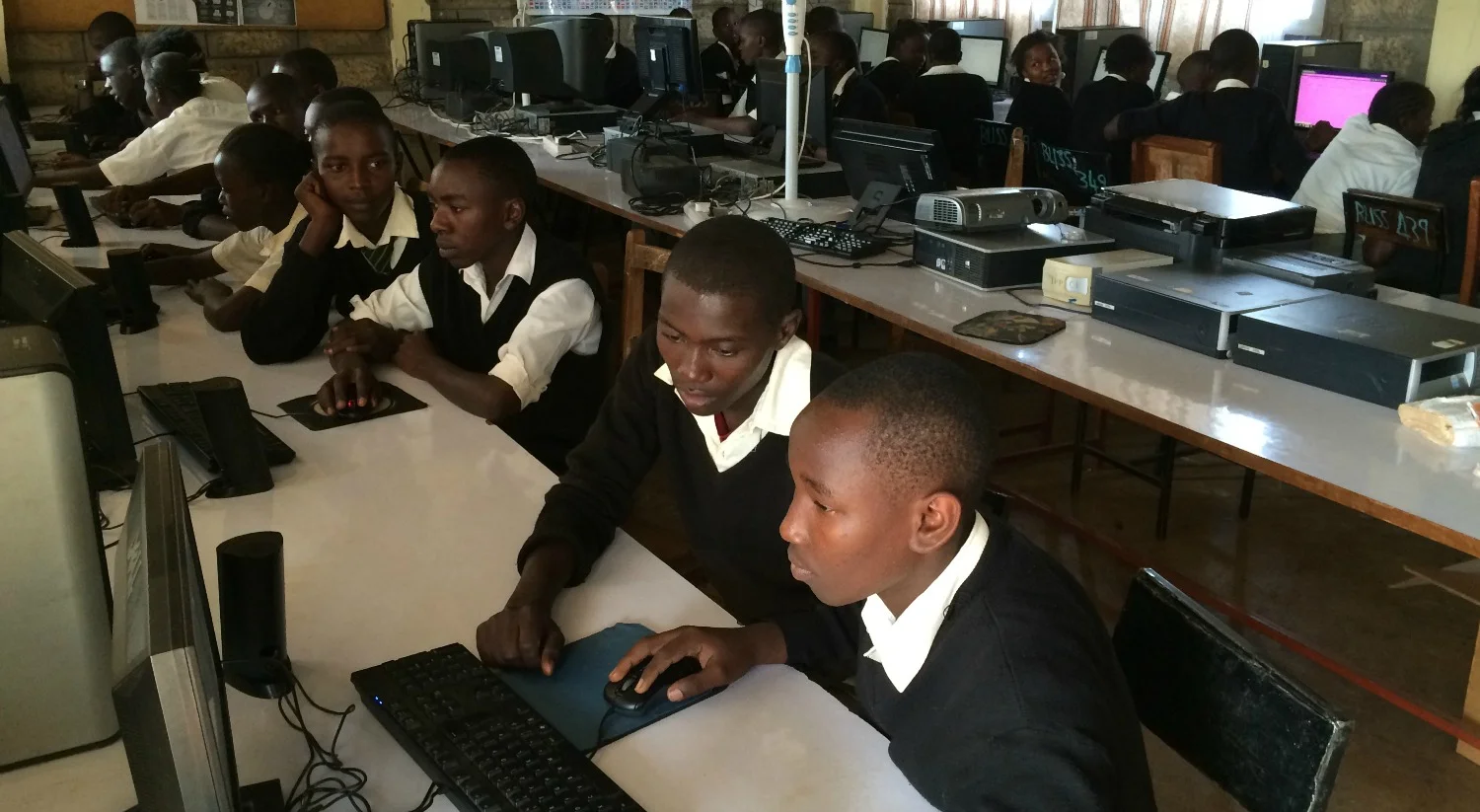
Students in an urban Kenyan school accessing learning resources through desktop computers. This environment demonstrates the benefits of reliable infrastructure and connectivity.

A rural classroom where teaching relies on chalkboards and textbooks due to lack of computers, illustrating the digital divide in education.
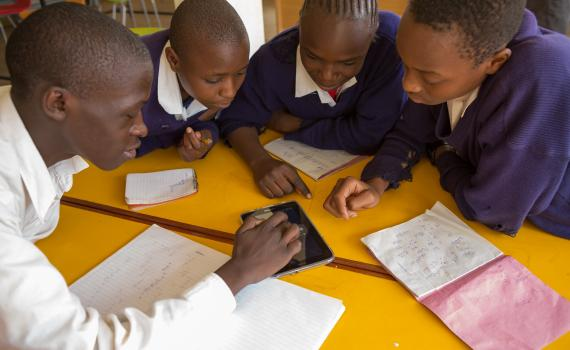
Learners sharing a single tablet as a result of limited resources. While collaborative, this limits individual engagement with technology.
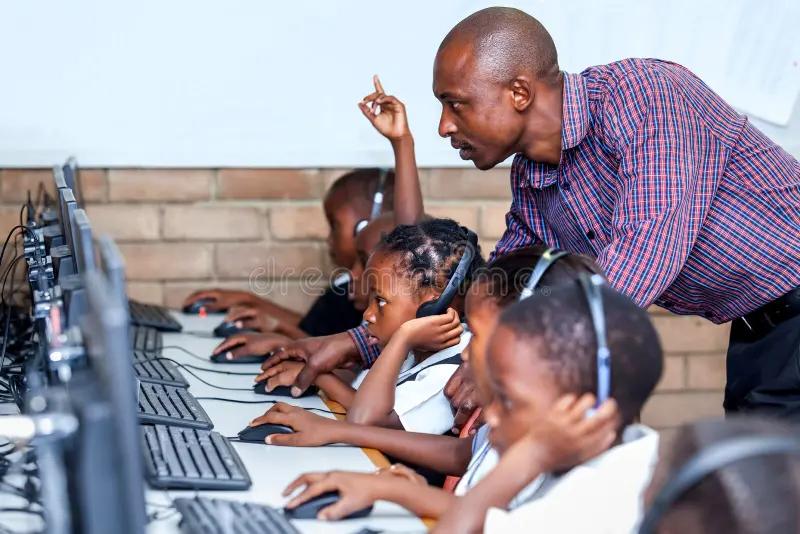
A teacher guiding students in the use of digital tools, emphasizing the importance of teacher training alongside infrastructure development.
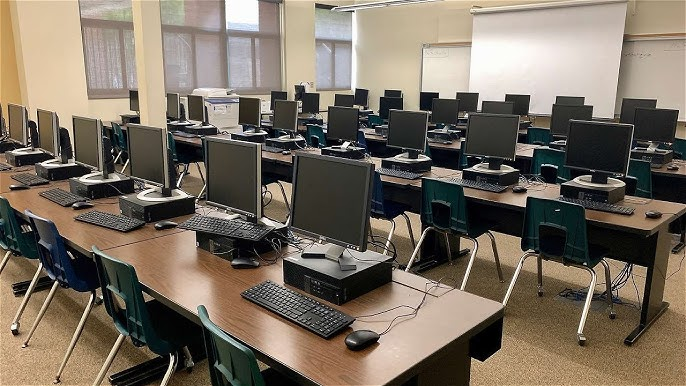
An ICT lab that remains underused due to lack of internet connectivity or maintenance, showing that equipment alone is not sufficient.
Conclusion
Technology access in schools remains uneven across Kenya. Addressing this challenge requires coordinated investment in infrastructure, teacher training, affordable connectivity, and inclusive digital education policies to ensure equal learning opportunities for all students.
Journey of Innovation - PowerPoint Presentation
Journey of Innovation
From Curiosity to Technology Entrepreneurship
Anusu Ian
BSc. Information Technology
Dedan Kimathi University of Technology
December 2025
Introduction
"Technology is not just about computers and code; it's about transforming lives, solving problems, and creating opportunities where none existed before."
This presentation chronicles my journey from a curious child in Kenya to an aspiring technology entrepreneur, guided by an unquenchable passion for innovation.
The Beginning
- Born: January 1, 2001 - First day of the new millennium
- Location: Kenya - At the forefront of Africa's tech innovation
- Early Interest: Natural curiosity about how things work
- Childhood Trait: Taking apart electronic devices to understand them
"Perhaps it was destiny that I would grow alongside the digital revolution."
Light And Salt Academy (2008-2015)
Foundation Years
- Started formal education at age 7
- Built strong foundation in Mathematics and Science
- Discovered leadership abilities early
- Learned the value of integrity and hard work
Leadership Journey
Primary School Leadership Roles:
Learned representation and mediation
Understood punctuality and responsibility
Represented entire student body
Head Boy: Key Lessons
- Stakeholder Management: Balancing interests of students, teachers, and administrators
- Communication: Established feedback sessions for students
- Leading by Example: Authority comes from position, respect from example
- Systemic Thinking: Understanding organizational change
The Transition (2015)
Moving to Maranda High School
Completing primary education marked a crucial milestone. The transition to secondary school was a time of careful consideration and exciting possibilities.
- Completed KCPE in 2015
- Chose Maranda High School for academic excellence
- Known for strong discipline and co-curricular programs
Maranda High School (2016-2019)
Building Character and Capability
- Academic Excellence: Strong performance in Mathematics, Physics, Computer Studies
- Motto: Excellence, Discipline, and Service
- Environment: Rigorous academic program
- Growth: Developed strong study habits and mental discipline
Growing Interest in Technology
"The moment I wrote my first working program - a simple calculator - was transformative. I realized coding wasn't just about syntax; it was about creative problem-solving."
Lessons from the Band
Musical Instruments: Trumpet, Trombone, Euphonium
- Teamwork: Each instrument has a role; beauty depends on harmony
- Discipline: Patience, repetition, and perseverance
- Timing & Synchronization: Directly applicable to real-time systems and network coordination
Leadership at Maranda
Represented classmates, maintained order
Enforced rules, mediated conflicts
Set tone for entire hostel, led by example
Dedan Kimathi University (2020-2025)
BSc. Information Technology
- Enrolled in 2020
- Known for strong engineering and technology programs
- Hands-on approach to learning
- Emphasis on innovation
- Perfect environment for transforming interest into professional expertise
First Year: Foundations
- Data Structures and Algorithms
- Programming Languages: C, C++, Java
- Database Management Systems
- Computer Architecture
- Learning to learn independently
"University education is about developing the ability to acquire, evaluate, and apply knowledge independently."
Class Representative (2020-2022)
University Leadership
- Primary liaison between students and faculty
- Coordinated with lecturers on schedule changes
- Communicated student concerns and feedback
- Organized study groups
- Developed negotiation and project management skills
Expanding Horizons: Cisco Certifications
- Introduction to Internet of Things (IoT)
- CCNA 1: Introduction to Networks
- OSI model & TCP/IP
- IP addressing & subnetting
- Routing & switching
- Introduction to Cybersecurity
- CIA triad
- Threats & vulnerabilities
- Security best practices
DeKUT Internal Attachment (May-July 2022)
First Professional IT Experience
- Worked with university IT department
- System maintenance and user support
- Network troubleshooting
- Group project: Hospital Management System (Visual Basic)
- Bridged theory-practice gap
Kenya Broadcasting Corporation (Sept-Dec 2024)
External Attachment - Kisumu
- Upgraded Mashinani Studio system
- Configured professional audio systems (Steinberg)
- Installed Cubase & FL Studio
- Comprehensive IT support
- Created technical documentation
Major Projects
AI-powered face recognition for automated attendance tracking
Comprehensive hospital management system
Computer vision for modernizing farming practices
Smart Attendance System
Final Year Project
- Technology: Face-API.js, WebRTC, Socket.IO, PHP, MySQL
- Features:
- Real-time face detection
- Anti-spoofing mechanisms
- Physical & online class support
- Automated reporting
- Parent notifications
- Impact: Eliminates manual processes, reduces fraud, provides data for intervention
Technical Skills Acquired
- Programming: Python, PHP, JavaScript, C, C++, Java, Visual Basic
- Web: HTML, CSS, React (learning), Socket.IO, WebRTC
- Database: MySQL - design, optimization, queries
- AI/ML: Computer vision, image processing, model training
- Networking: TCP/IP, routing, switching, security
- Hardware: Computer maintenance, audio systems
Leadership Philosophy
- Leadership is Service: Not about position or power
- Communication is Fundamental: Clear, timely, two-way
- Lead by Example: Authority from position, respect from example
- Continuous Improvement: Feedback is a gift
- Balance Stakeholder Interests: Find common ground
Technology Philosophy
- Human-Centered: Technology should serve humanity
- African Context: Solutions fitted to local challenges
- Innovation Through Integration: Combining existing tech creatively
- Commitment to Excellence: Work worth being proud of
- Continuous Learning: Intellectual humility and growth mindset
Challenges & Growth
- Financial Constraints: Developed resourcefulness
- High Expectations: Learned perfection vs. excellence
- Balancing Multiple Responsibilities: Time management
- Technical Failures: Perseverance and systematic problem-solving
- Imposter Syndrome: Recognizing feelings as normal
Entrepreneurial Vision: Tumboze Technologies
Comprehensive Technology Solutions Provider
- Software Development (custom applications, web, mobile)
- Network Installation & CCTV Systems
- Electrical Wiring Configuration
- Computer Installation & Support
"Quality over growth, continuous learning, social responsibility, ethical technology"
Short-term Goals
- Complete Bachelor's degree successfully (December 2025)
- Gain professional experience in established companies
- Deepen technical skills and business understanding
- Build project portfolio
- Take freelance contracts while employed
- Build reputation and client base gradually
Long-term Goals (5-10 Years)
- Establish Tumboze Technologies as respected tech provider
- Build skilled team
- Serve diverse client base across sectors
- Generate sustainable revenue
- Contribute to Kenya's economy through employment and taxes
- Mentor emerging tech professionals
- Develop Africa-context technology solutions
Personal & Professional Values
- Integrity: Honesty even when inconvenient
- Compassion: Understanding people's needs and context
- Humility: Acknowledging what I don't know
- Perseverance: Continuing through difficulty
- Excellence: Striving genuinely for quality
Gratitude
- Family for unwavering support and investment
- Teachers and supervisors for guidance
- Friends and classmates for enriching my learning
- Institutions: Light And Salt Academy, Maranda High School, DeKUT
- KBC supervisors: Luke Owino & Darius Riro
- Everyone who provided encouragement and support
Key Lessons Learned
- Passion and curiosity drive success in technology
- Leadership is service, not status
- Technical skills matter, but character matters more
- Challenges and failures are essential for learning
- Success requires perseverance over time
- Technology should serve humanity
- Continuous learning is essential
- Integrity, compassion, and excellence guide all work
The Journey Continues
"The journey of innovation continues. Every challenge is an opportunity, every project a learning experience, and every day offers possibility to grow, contribute, and move closer to my vision of expanding innovation in the world of computing."
Thank You
Anusu Ian
[email protected] | +254 706 707 144
Smart Attendance System - PowerPoint Presentation
A Smart Facial Recognition–Based Attendance System
for Physical and Online University Classes
Name: Anusu Ian
Course: Bachelor of Science in Information Technology
Institution: Dedan Kimathi University of Technology
December 2025
Introduction
- Attendance management is essential in higher education
- Traditional methods are inefficient and prone to errors
- Growth of online and hybrid learning increases challenges
- Need for a secure, automated, and scalable solution
Background of the Study
- Manual attendance registers consume class time
- Proxy attendance reduces academic integrity
- Online learning lacks effective attendance verification
- Existing biometric systems require expensive hardware
Problem Statement
- Inaccurate attendance records in physical classes
- Weak verification mechanisms in online classes
- High costs of hardware-based biometric systems
- Lack of a unified attendance system for all learning modes
Aim of the Project
- To design and implement a smart attendance system
- To use facial recognition for accurate identity verification
- To support both physical and online university classes
- To eliminate the need for specialized biometric hardware
Overview of the Proposed System
- Fully web-based attendance system
- Accessible through any modern web browser
- Uses facial recognition for attendance verification
- Centralized system for physical and online classes
System Architecture
- Client–server architecture
- Client side: webcam access and facial recognition
- Server side: application logic and data management
- Centralized MySQL database for attendance records
Technologies Used
- HTML, CSS, JavaScript (User Interface)
- Face-API.js for facial recognition
- PHP and Node.js for backend logic
- Socket.io for real-time communication
- WebRTC for video conferencing
- MySQL for database management
Facial Recognition Process
- Student facial data captured during registration
- Face descriptors generated and stored securely
- Live webcam images captured during class
- Face matching performed in real time
- Attendance marked automatically upon verification
Attendance Verification Modes
Single-Shot Verification
- Student verified once per session
- Suitable for physical classrooms
Continuous Verification
- Periodic verification throughout the session
- Enhances engagement in online classes
Physical Classroom Module
- Lecturer starts a class session
- Students authenticate attendance via webcam
- No need for fixed cameras or fingerprint scanners
- Real-time attendance marking and reporting
Online Classroom Module
- Integrated virtual classroom environment
- Real-time video and audio communication
- Facial recognition embedded in live sessions
- Continuous monitoring of student presence
Privacy and Security Considerations
- Facial recognition processed on the client side
- Only facial descriptors stored, not raw images
- Role-based access control for system users
- Improved privacy and reduced server load
Benefits of the System
- Eliminates proxy attendance
- Works for both physical and online classes
- Reduces infrastructure and operational costs
- Improves accountability and attendance accuracy
- Scalable across departments and institutions
Limitations and Future Improvements
Current Limitations:
- Accuracy affected by lighting and camera quality
- Dependence on internet connectivity
Future Enhancements:
- Liveness detection
- Improved accuracy models
- Better performance in low-bandwidth environments
Conclusion
- Facial recognition provides a reliable attendance solution
- Web-based approach ensures flexibility and scalability
- System enhances integrity in attendance management
- Suitable for modern university learning environments
Traditional African Music and Dance in Kenya
Video Description
This 20-minute presentation explores traditional African music and dance in Kenya, demonstrating its vital importance in shaping social identity, preserving cultural heritage, and strengthening community life across Kenyan communities.
Traditional African Music and Dance - Abstracts
English Abstract
Title: Traditional African Music and Dance in Kenya and Its Role in Social Identity and Community Life
Abstract: This presentation explores traditional African music and dance in Kenya as a vital aspect of African culture and examines its importance in shaping social identity, preserving heritage, and strengthening community life. Traditional music and dance among Kenyan communities such as the Luhya, Luo, Kikuyu, Kalenjin, and Maasai have historically played a central role in ceremonies, communication, and social organization.
The study highlights how music and dance are used during rites of passage, religious ceremonies, marriage celebrations, conflict resolution, and communal gatherings. Through rhythmic movement, instruments, songs, and oral performance, cultural values, history, and moral lessons are transmitted from one generation to another. Unlike modern entertainment, traditional African music and dance function as tools for education, unity, and cultural continuity.
In the face of globalization and modernization, traditional music and dance continue to adapt while maintaining their cultural significance. This presentation demonstrates that traditional African music and dance remain essential in promoting cultural identity, social cohesion, and intergenerational knowledge transfer within Kenyan society.
Keywords: Traditional Music, African Dance, Cultural Identity, Kenya, Social Cohesion, Heritage Preservation
Muhtasari wa Kiswahili
Kichwa: Muziki na Ngoma za Jadi za Kiafrika nchini Kenya na Jukumu Lake katika Utambulisho wa Jamii na Maisha ya Kijamii
Muhtasari: Uwasilishaji huu unachunguza muziki na ngoma za jadi za Kiafrika nchini Kenya kama kipengele muhimu cha utamaduni wa Afrika na kueleza mchango wake katika kuimarisha utambulisho wa jamii, kuhifadhi urithi wa kitamaduni, na kuimarisha mshikamano wa kijamii. Jamii mbalimbali za Kenya kama Waluhya, Waluo, Wakikuyu, Wakalenjin na Wamaasai zimetumia muziki na ngoma za jadi kama sehemu muhimu ya maisha yao ya kila siku.
Muziki na ngoma hutumika katika sherehe za kijamii kama vile tohara, ndoa, ibada za kidini, na mikutano ya kijamii. Kupitia nyimbo, ala za muziki na miondoko ya ngoma, jamii huwasilisha historia, maadili, na mafunzo ya maisha kwa vizazi vijavyo. Tofauti na burudani ya kisasa, muziki na ngoma za jadi hutumika kama nyenzo za elimu, mawasiliano na mshikamano wa jamii.
Licha ya changamoto za utandawazi na mabadiliko ya kisasa, muziki na ngoma za jadi bado zina nafasi muhimu katika kulinda utambulisho wa kitamaduni na kuendeleza urithi wa Kiafrika nchini Kenya.
Maneno Muhimu: Muziki wa Jadi, Ngoma za Kiafrika, Utambulisho wa Kitamaduni, Kenya, Mshikamano wa Jamii, Uhifadhi wa Urithi
Isuphe (Maragoli / Lulogooli)
Omutwe: Muziki nende Ng'oma za Khisimba mu Kenya ne Bukhulukhulu bwazo mu Bulamu bwa Abafirika
Isuphe: Omulimo guno gulanga ebikholo bya muziki nende ng'oma za khisimba mu Kenya ne bukhulukhulu bwazo mu bulamu bwa Abafirika. Mu mikanda mingi nga Abaluhya, Abaluo, Abakikuyu, Abakalenjin ne Abamaasai, muziki nende ng'oma byali ne bukhulukhulu mu mikhuya gya bulamu bwa buli munsi.
Muziki nende ng'oma bikholesibwa mu makhuya nga circumcision, obwoya, obulombolombi, emikholo gya milimu ne emikholo gya muryango. Khubandukhila mu nyimbo, ebikomo, ne endamya za ng'oma, amakhura ga khisimba, ebisimbwa ne amalako gasasulwa okuva ku bakhongo khujila ku bana.
Ne khubukhole bwa bulamu bwa kisasa, muziki nende ng'oma za khisimba zikhalikana khulinda obululu bwa Abafirika, khunyola omwoyo gwa bukholo ne khulanga omwoyo gwa bumwe mu mikanda gya Kenya.
Amalango ga Bukhulukhulu: Muziki gwa Khisimba, Endamya za Khisimba, Obululu bwa Bukholo, Kenya, Bumwe bwa Mikanda, Khuhaya Amalako
Traditional African Music and Dance - PowerPoint
Traditional African Music and Dance in Kenya
Demonstrating Its Importance in African Culture
Name: Anusu Ian
Course: Bachelor of Science in Information Technology
Institution: Dedan Kimathi University of Technology
December 2025
Introduction
- African culture is rich and diverse
- Music and dance are central elements of African life
- Used beyond entertainment
- Important for identity, unity, and heritage preservation
Understanding African Culture
- Culture refers to shared beliefs, values, and practices
- Passed from generation to generation
- Expressed through language, art, music, and dance
- Music and dance reflect African worldviews
Traditional Music in Kenya
- Found among all Kenyan communities
- Includes singing, drumming, chanting, and instruments
- Different styles for different occasions
- Music carries meaning and messages
Traditional Dance in Kenya
- Dance accompanies music
- Movements symbolize emotions, values, and history
- Performed during ceremonies and celebrations
- Encourages community participation
Examples from Kenyan Communities
- Luhya: Isukuti dance
- Luo: Dudu and Ohangla dances
- Kikuyu: Mwomboko dance
- Maasai: Jumping dances (Adumu)
- Kalenjin: Warrior and celebratory dances
Role in Cultural Identity
- Defines who a community is
- Preserves traditions and customs
- Strengthens sense of belonging
- Distinguishes communities from others
Role in Rites of Passage
- Used in initiation ceremonies
- Performed during marriages
- Present in funeral rites
- Marks transition stages in life
Music and Dance as Communication
- Songs convey messages and stories
- Drums used for signaling and announcements
- Lyrics teach morals and values
- Tool for social expression
Social Unity and Community Life
- Encourages collective participation
- Brings together all age groups
- Promotes cooperation and togetherness
- Strengthens community bonds
Educational Importance
- Teaches history and traditions
- Passes wisdom from elders to youth
- Encourages discipline and respect
- Supports moral development
Religious and Spiritual Significance
- Used in worship and prayers
- Connects communities to ancestors
- Symbolizes gratitude and hope
- Strengthens spiritual beliefs
Impact of Modernization
- Western music influences youth
- Reduced practice of traditional dances
- Urbanization limits cultural gatherings
- Risk of cultural erosion
Preservation of Traditional Music and Dance
- Cultural festivals and events
- School cultural programs
- Media and documentation
- Integration into modern performances
Importance to Kenyan Society Today
- Promotes national unity
- Enhances tourism
- Preserves African identity
- Encourages cultural pride
Challenges Facing Traditional Culture
- Declining interest among youth
- Lack of documentation
- Commercialization of culture
- Loss of elders and knowledge holders
Conclusion
- Traditional music and dance are vital to African culture
- Serve social, educational, and spiritual roles
- Still relevant in modern society
- Preservation is essential for future generations
Youth Unemployment and Digital Skills Gap
Video Description
This 20-minute presentation examines youth unemployment as a major challenge facing modern society, focusing on the digital skills gap and proposing practical solutions including skills-based education, digital literacy programs, and industry collaboration.
Youth Unemployment - Abstracts
English Abstract
Title: Digital Unemployment Among Youth and the Skills Gap in the Modern Job Market
Abstract: Modern society is experiencing rapid technological advancement that has significantly transformed the global job market. While technology has created new opportunities, it has also contributed to rising youth unemployment due to a growing mismatch between academic qualifications and market-relevant digital skills. Many graduates lack practical competencies required by employers, resulting in underemployment and joblessness.
This presentation examines youth unemployment as a major challenge facing modern society, with a focus on the digital skills gap. It explores contributing factors such as outdated education systems, limited access to digital training, and rapid technological change. The presentation further proposes solutions including skills-based education, digital literacy programs, industry–academic collaboration, and the promotion of entrepreneurship and innovation hubs.
Addressing youth unemployment requires coordinated efforts from governments, educational institutions, and the private sector. Equipping young people with relevant digital skills can enhance employability, reduce economic dependency, and promote sustainable development in modern society.
Keywords: Youth Unemployment, Digital Skills Gap, Education Reform, Employability, Entrepreneurship, Technology
Muhtasari wa Kiswahili
Kichwa: Ukosefu wa Ajira kwa Vijana na Pengo la Ujuzi wa Kidijitali katika Soko la Ajira la Kisasa
Muhtasari: Jamii ya kisasa inashuhudia maendeleo makubwa ya teknolojia ambayo yamebadilisha soko la ajira duniani. Ingawa teknolojia imeleta fursa mpya, pia imechangia kuongezeka kwa ukosefu wa ajira miongoni mwa vijana kutokana na pengo kati ya elimu wanayopata na ujuzi unaohitajika katika soko la ajira.
Uwasilishaji huu unachunguza ukosefu wa ajira kwa vijana kama changamoto kubwa inayokumba jamii ya kisasa, hasa pengo la ujuzi wa kidijitali. Unabainisha sababu kama mitaala isiyosasishwa, ukosefu wa mafunzo ya vitendo, na kasi ya mabadiliko ya kiteknolojia. Pia unapendekeza suluhisho kama elimu inayozingatia ujuzi, programu za ujuzi wa kidijitali, ushirikiano kati ya taasisi za elimu na viwanda, pamoja na kuhimiza ujasiriamali.
Kutatua changamoto ya ukosefu wa ajira kwa vijana kutachangia maendeleo ya kiuchumi na kijamii katika jamii ya kisasa.
Maneno Muhimu: Ukosefu wa Ajira kwa Vijana, Pengo la Ujuzi wa Kidijitali, Mageuzi ya Elimu, Uwezo wa Kupata Ajira, Ujasiriamali, Teknolojia
Isuphe (Maragoli / Lulogooli)
Omutwe: Obusuma bwa Bana mu Makhuya ga Kukhola ne Obukhole bwa Ujuzi wa Digital
Isuphe: Bulamu bwa kisasa buli nende ebikholo ebingi ebivuka mu teknologia, ebihindula amakhuya ga kukhola. Ne kakhula teknologia yelanga ebikhuya ebipya, eyo etira khulanga obusuma bwa bana bingi khubukhola, khulondoka ne ebikholo bya ujuzi ogwa kukhola mu makhuya ga kisasa.
Omulimo guno gulanga obusuma bwa bana nga ekhibi ekikulu mu bulamu bwa kisasa, khulondola obukhole bwa ujuzi wa digital. Gulanga ebivako nga masomo agatakhali ga kisasa, obukhole bukhende bwa mafunzo ga digital, ne obukhole bwa teknologia okhukhula muno. Gulanga ebikhola ebiriko nga masomo agakhola ku ujuzi, amafunzo ga digital, obulayi bwa khukhola hamwe hagati ya mashule ne amakompanyi, ne okhukhomera obukhola bwa biashara.
Okhusola obusuma bwa bana khulinyola obulamu bwa mikanda ne okhulanga obukhole bwa bulamu bwa kisasa.
Amalango ga Bukhulukhulu: Obusuma bwa Bana, Obukhole bwa Ujuzi wa Digital, Okhusola Masomo, Obukhola bwa Biashara, Teknologia
Youth Unemployment and Digital Skills Gap - PowerPoint
Youth Unemployment and the Digital Skills Gap
in Modern Society
Name: Anusu Ian
Course: Bachelor of Science in Information Technology
Institution: Dedan Kimathi University of Technology
December 2025
Introduction
- Modern society is rapidly transforming due to technology
- Employment patterns are changing globally
- Youth unemployment remains a major challenge
- Digital skills gap is a key contributing factor
Background of the Problem
- Increase in number of graduates every year
- Limited absorption into the job market
- Employers demand digital and practical skills
- Education systems lag behind industry needs
Understanding Youth Unemployment
- Youth unemployment refers to joblessness among young people
- Affects both educated and uneducated youth
- Common in developing and developed countries
- Kenya faces a high youth unemployment rate
What is the Digital Skills Gap?
Difference between skills youth possess and what employers need:
- Digital literacy
- Programming & data skills
- Problem-solving & innovation
- Many graduates lack hands-on experience
Causes of the Digital Skills Gap
- Outdated academic curricula
- Overemphasis on theory over practice
- Limited access to technology and training
- Rapid technological advancement
Role of Technology in Employment
- Automation replacing traditional jobs
- Growth of digital platforms and remote work
- Emergence of new careers in tech
- Need for continuous learning and adaptation
Effects of Youth Unemployment
- Increased poverty and dependency
- Mental health challenges among youth
- Rise in crime and social unrest
- Wasted human potential
Economic Impact on Society
- Reduced productivity
- Slower economic growth
- Increased government expenditure
- Lower innovation levels
Solution 1: Skills-Based Education
- Focus on practical and hands-on learning
- Integration of digital skills in curricula
- Project-based learning
- Continuous curriculum review
Solution 2: Digital Literacy Programs
- Coding bootcamps and online courses
- Government-sponsored digital training
- Affordable and accessible learning platforms
- Lifelong learning opportunities
Solution 3: Industry–Academic Collaboration
- Partnerships with private sector
- Internship and attachment programs
- Mentorship from industry professionals
- Exposure to real-world work environments
Solution 4: Entrepreneurship and Innovation
- Encouraging self-employment
- Support for startups and innovation hubs
- Access to funding and incubation centers
- Digital entrepreneurship opportunities
Role of Government and Policy
- Education reforms
- Investment in digital infrastructure
- Support for youth innovation programs
- Public–private partnerships
Case Example: Kenya Context
- Growth of tech hubs like Konza Technopolis
- Youth-led startups in fintech and agritech
- Government digital skills initiatives
- Impact on youth employment
Challenges in Implementing Solutions
- Limited funding
- Digital divide (urban vs rural)
- Resistance to curriculum change
- Lack of awareness
Recommendations
- Modernize education systems
- Expand digital access
- Strengthen industry partnerships
- Promote innovation and entrepreneurship
Expected Outcomes
- Reduced youth unemployment
- Increased employability
- Economic growth
- Empowered and skilled youth
Conclusion
- Youth unemployment is a major societal challenge
- Digital skills gap is a key cause
- Practical solutions exist
- Collective effort is required